Introduction: Bank loans are best if you have a strong credit history and need lower, long-term interest rates. Alternative finance is the better choice if you need rapid approval, have a short-term cash flow gap, or lack the collateral required by traditional institutions. [1, 2, 3, 4] Borrowing today isn’t just a choice between banks and mobile loans. People can also borrow from SACCOs, microfinance institutions, employers, family, friends, buy-now-pay-later providers, and digital lenders. The right option depends on the purpose, urgency, cost, and repayment ability.
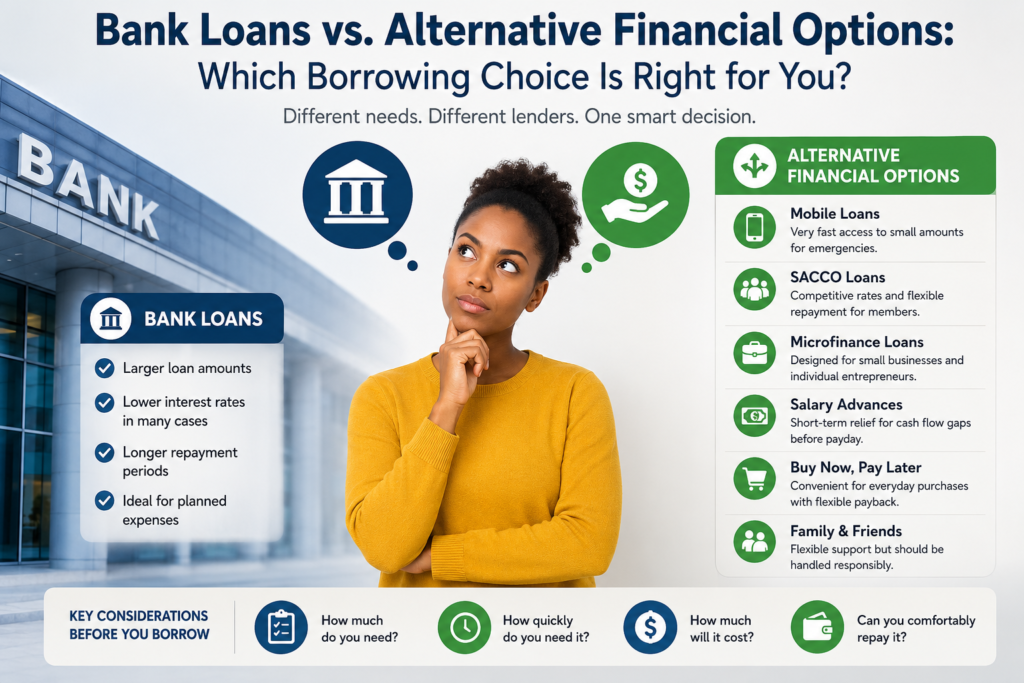
The best borrowing option depends on four questions: How much money do you need? How quickly do you need it? How much will it cost? Can you comfortably repay it? Understanding the answers before borrowing helps you avoid unnecessary debt and choose a solution that supports your financial goals instead of creating new problems.
Whether you’re paying school fees, expanding a business, handling an emergency medical bill, or financing a major purchase, this guide will help you compare the most common borrowing options and decide which one fits your situation.
A Quick Comparison of Your Borrowing Options
| Borrowing Option | Best For | Approval Speed | Loan Size | Repayment Period |
|---|---|---|---|---|
| Bank Loans | Large planned expenses | Moderate | Medium to Large | Medium to Long |
| Mobile Loans | Emergencies | Very Fast | Small | Short |
| SACCO Loans | Members with savings | Moderate | Medium to Large | Flexible |
| Microfinance Loans | Small businesses and individuals | Moderate | Small to Medium | Medium |
| Salary Advances | Short-term cash gaps | Fast | Small | Usually next salary |
| Family or Friends | Temporary financial support | Depends | Varies | Flexible by agreement |
This table provides a snapshot, but choosing the right borrowing option requires looking beyond speed and convenience.
Understanding What You’re Really Paying For
Many people focus only on how much they can borrow, yet the more important question is how much they will repay.
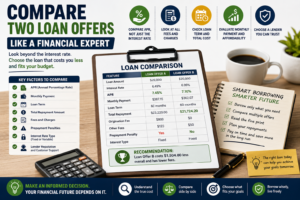
The true cost of borrowing includes more than interest. Depending on the lender and the loan agreement, you may also encounter processing fees, service charges, insurance requirements, administrative costs, or late payment penalties.
Before accepting any loan, ask for the total repayment amount—not just the amount you’ll receive.
A loan that appears cheaper at first glance may actually cost more once every fee is included.
Bank Loans
Banks remain one of the most established sources of credit. They offer a wide range of products, including personal loans, education loans, business financing, mortgages, and asset financing.
Because banks generally carry out a more detailed assessment before approving a loan, the application process may take longer than other borrowing options. However, that extra assessment often allows them to provide larger loan amounts and longer repayment periods.
When a Bank Loan Makes Sense
Bank loans are well suited to planned expenses rather than emergencies.
Examples include:
- Purchasing business equipment
- Expanding a business
- Paying university fees
- Renovating a home
- Buying a vehicle
- Financing long-term projects
These are expenses where the ability to spread repayments over time is often more valuable than receiving money immediately.
Advantages of Bank Loans
Banks typically offer a variety of loan products, giving borrowers more flexibility to match the loan with their financial goal.
Longer repayment periods can reduce monthly repayment pressure, making larger loans easier to manage within a household budget.
Borrowers who maintain a strong repayment history may also build a positive banking relationship that can be useful when applying for future financial products.
Things to Consider
The approval process may require supporting documents such as proof of income, identification, bank statements, or business records.
Because approval can take longer, bank loans may not always be practical for urgent expenses that require immediate funding.
Mobile Loans
Mobile loans have transformed access to credit by allowing borrowers to apply through a mobile phone and receive funds quickly.
For many people, speed is the biggest advantage.
If your car breaks down on the way to work or an unexpected medical expense arises, waiting several days for traditional loan approval may not be practical.
When a Mobile Loan Makes Sense
Mobile loans are generally suitable for genuine short-term emergencies or temporary cash-flow gaps where repayment is realistic within the agreed period.
They are designed for convenience rather than long-term financing.
Advantages of Mobile Loans
Applications are usually straightforward.
Borrowers can often apply without visiting a physical branch, and repayments are commonly made through digital channels.
This convenience has made mobile lending one of the most widely used borrowing options in Kenya.
Things to Consider
Because many mobile loans are short-term, repayment dates arrive quickly.
Borrowing repeatedly to cover ordinary living expenses such as groceries, entertainment, or routine shopping may indicate a budgeting problem rather than a borrowing need.
SACCO Loans
Savings and Credit Cooperative Organizations (SACCOs) occupy a unique position between traditional banking and community finance.
Members generally save regularly before becoming eligible to borrow, creating a system that encourages both saving and responsible borrowing.
Why Many People Choose SACCOs
For eligible members, SACCO loans can provide flexible financing for education, farming, home improvements, business growth, or other significant expenses.
The combination of saving and borrowing encourages long-term financial discipline.
Things to Consider
Access to credit depends on membership requirements and the policies of the individual SACCO.
Borrowing limits may be linked to your savings or other eligibility criteria.
Microfinance Institutions
Microfinance institutions primarily serve individuals and small businesses that may have difficulty accessing traditional bank credit.
Many entrepreneurs use microfinance to finance inventory, equipment, or working capital.
Advantages
Microfinance institutions often understand the realities of self-employment and small business operations.
Some also provide financial education or business support alongside lending.
Things to Consider
Loan products, fees, repayment schedules, and eligibility requirements differ from one institution to another.
Comparing offers before borrowing is essential.
Salary Advances
Some employers provide salary advances, while certain financial service providers also offer products linked to expected income.
A salary advance is generally intended to bridge a short financial gap rather than finance major purchases.
If used responsibly, it can help avoid taking a more expensive short-term loan.
However, receiving less money on your next payday means careful budgeting is still necessary.
Family and Friends
Borrowing from family or friends may seem like the easiest option because it often involves little paperwork and may not include interest.
Even so, it should be approached with the same seriousness as any other loan.
Discuss the repayment amount, repayment date, and expectations in advance.
Clear communication helps protect both your finances and your relationships.
How Do Borrowing Costs Compare?
Cost should never be measured by interest alone.
When comparing lenders, consider:
- Interest charges
- Processing fees
- Administrative fees
- Repayment flexibility
- Late payment penalties
- Total repayment amount
The cheapest loan is the one that meets your needs while costing the least overall—not necessarily the one advertising the lowest interest rate.
Which Option Is Best for Different Situations?
Choosing the right loan becomes easier when you match the borrowing option to your actual need.
Medical emergency: A mobile loan or salary advance may be appropriate if immediate funds are required.
Starting or expanding a business: A bank loan, SACCO loan, or suitable microfinance product may offer repayment terms that better support business growth.
School fees: Bank loans and SACCO loans are often worth considering because education expenses are usually planned rather than unexpected.
Home renovation: Longer-term financing may reduce monthly repayment pressure compared with relying on short-term credit.
Temporary cash shortage before payday: A salary advance or another lower-cost short-term option may be more suitable than taking multiple digital loans.
Questions to Ask Before Borrowing
Before signing any loan agreement, ask yourself:
- Do I really need to borrow?
- Have I compared several lenders?
- What is the total repayment amount?
- Can I comfortably afford the repayments?
- What happens if my income is delayed?
- Is there a less expensive alternative?
These questions can prevent costly borrowing decisions.
Common Borrowing Mistakes
Many debt problems begin long before the first repayment is due.
Avoid these mistakes:
- Borrowing without a repayment plan.
- Accepting the first loan offer without comparing alternatives.
- Borrowing more than you actually need.
- Ignoring loan terms and conditions.
- Missing repayment dates.
- Using one loan to repay another without a clear strategy.
Good borrowing habits begin with careful planning rather than quick decisions.
Frequently Asked Questions
Is a bank loan always better than a mobile loan?
No. The better option depends on your purpose, how urgently you need the money, the repayment period, and the total borrowing cost.
Which borrowing option is usually the fastest?
Mobile loans are generally designed for faster application and disbursement than traditional bank loans.
Are SACCO loans better than bank loans?
Neither is universally better. The right choice depends on eligibility, repayment terms, borrowing costs, and your financial goals.
Should I borrow from family instead of a lender?
Borrowing from family can work well when expectations are discussed openly and both parties agree on repayment terms. Treat the arrangement responsibly to avoid damaging relationships.
EVENTUALLY,
The best borrowing option isn’t determined by advertising, convenience, or the maximum amount offered. It’s determined by how well the loan fits your financial need, your repayment ability, and your long-term financial goals.
If you need immediate funds for a genuine emergency, a fast digital solution may be appropriate. If you’re financing education, growing a business, or making a significant purchase, a bank, SACCO, or another structured lending option may provide more suitable repayment terms. Whatever option you choose, take time to compare offers, understand the full cost of borrowing, and borrow only what you genuinely need.
Responsible borrowing isn’t about finding the fastest lender—it’s about making a decision that strengthens your financial future instead of creating unnecessary financial pressure.
Disclaimer: This article is for informational purposes only and should not be considered financial or legal advice. Loan products, eligibility requirements, interest rates, fees, and repayment terms vary by lender. Always read the loan agreement carefully and compare available options before borrowing.
.