Introductions: Selecting the proper loan type goes beyond getting approval since it involves choosing a loan that will suit your financial position, budget, and future plans. The improper loan choice may cost you thousands of dollars in interest charges, make you unable to make loan payments comfortably, or even land you into unnecessary debts. But the right loan may enable you to raise finances for major purchases or expenses without excessive loan borrowing costs.
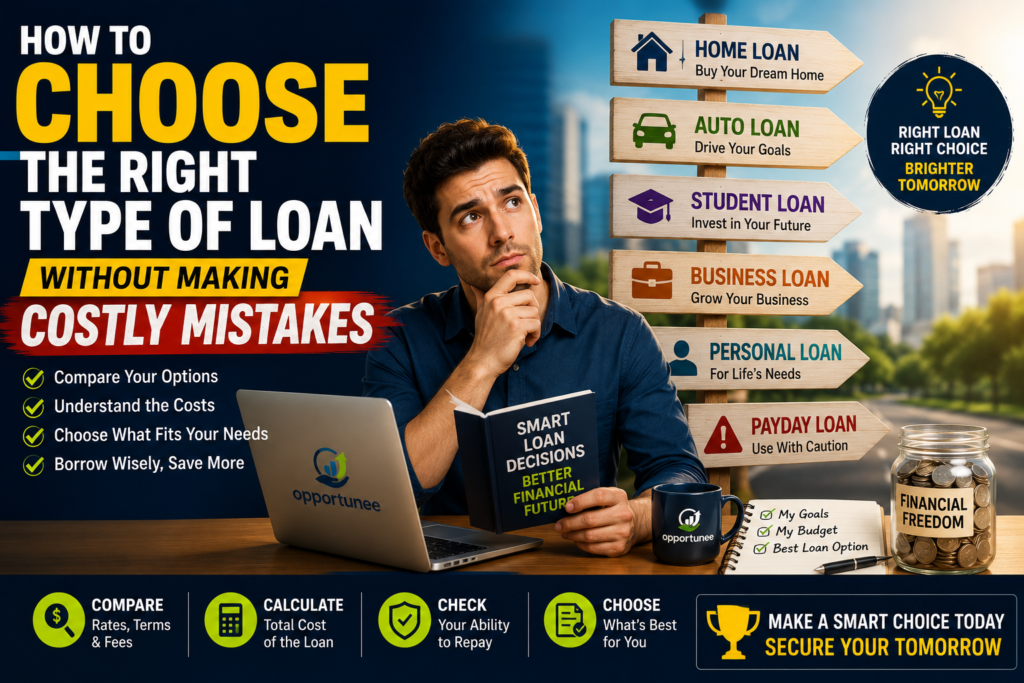
When choosing the loan type, whether personal, mortgage, auto, student loan, or business, it is important to understand how every loan works before committing yourself to loan agreements. This guide provides information on how to select the right loan type, factors to compare, and mistakes to avoid when borrowing.
Why Choosing the Right Loan Matters
Every loan comes with its own purpose, costs, repayment terms, and risks. While two lenders may offer the same loan amount, the total amount you repay can vary significantly depending on the interest rate, fees, and repayment period.
For example, a loan with a lower monthly payment may seem attractive at first, but if it has a much longer repayment term, you could end up paying considerably more in interest over time.
Choosing the right loan can help you:
- Save money on interest and fees.
- Keep monthly payments affordable.
- Protect your credit score.
- Reduce financial stress.
- Reach your financial goals more efficiently.
Instead of asking, “Which loan can I qualify for?” ask, “Which loan best fits my financial situation?”
Start by Understanding Why You Need to Borrow
The purpose of your loan should determine the type of financing you choose. Borrowing for the wrong reason—or using the wrong loan for the job—can increase costs unnecessarily.
Here are some common borrowing needs:
Buying a Home
A mortgage is generally designed for purchasing property because it offers long repayment periods and competitive interest rates compared to many other loan types.
Purchasing a Vehicle
Auto loans are specifically intended for vehicle purchases. Since the vehicle usually serves as collateral, interest rates are often lower than those for unsecured personal loans.
Covering Emergency Expenses
Unexpected medical bills, urgent home repairs, or emergency travel may justify a personal loan if you don’t have enough savings. However, it’s worth comparing alternatives before borrowing.
Paying for Education
Student loans are structured for education-related expenses and often include borrower protections or flexible repayment options, depending on the lender or program.
Starting or Growing a Business
Business loans are designed to finance equipment, inventory, expansion, or working capital. Mixing personal and business debt can complicate your finances, so using the appropriate loan type is often the better choice.
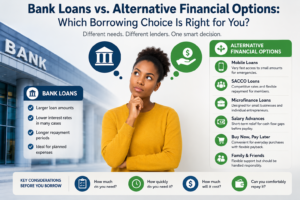
Understand the Most Common Types of Loans
Knowing the main loan categories helps narrow your options.
Personal Loans
Personal loans are among the most flexible borrowing options because the funds can be used for various purposes, including home improvements, debt consolidation, weddings, or unexpected expenses.
Many personal loans are unsecured, meaning you don’t have to provide collateral. Approval typically depends on your creditworthiness and income.
Personal loans may be suitable if you need a fixed amount of money and want predictable monthly payments.
Mortgage Loans
Mortgages are used to purchase homes or refinance existing mortgages.
These loans typically have longer repayment periods—often 15 to 30 years—which helps spread the cost over time. Because the property serves as collateral, mortgage interest rates are generally lower than those of many unsecured loans.
Auto Loans
Auto loans help finance new or used vehicles.
The lender usually holds a security interest in the vehicle until the loan is repaid. If payments aren’t made, the lender may have the right to repossess the vehicle under the loan agreement.
Student Loans
Student loans are intended to cover educational expenses such as tuition, books, and living costs while studying.
Depending on where you live and the lender you choose, repayment terms and borrower benefits can vary.
Business Loans
Business loans support entrepreneurs and companies that need funding for operations, equipment, inventory, or expansion.
Lenders often evaluate business revenue, financial statements, and credit history before approving financing.
Compare Secured and Unsecured Loans
One of the biggest decisions you’ll face is whether to choose a secured or unsecured loan.
Secured Loans
A secured loan requires collateral, such as a house, vehicle, or savings account.
Advantages include:
- Lower interest rates
- Higher borrowing limits
- Easier approval for some borrowers
Potential drawback:
If you fail to repay the loan, you could lose the asset used as collateral.
Unsecured Loans
Unsecured loans don’t require collateral.
Approval is based primarily on your income, credit history, and ability to repay.
Although they’re more convenient, unsecured loans often have higher interest rates because the lender assumes greater risk.
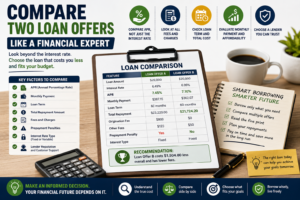
Compare More Than Just the Interest Rate
Many borrowers focus only on the advertised interest rate, but that’s only part of the picture.
Before choosing a loan, compare:
Annual Percentage Rate (APR)
The APR reflects the overall cost of borrowing by combining the interest rate with certain fees. Comparing APRs can give you a clearer view of the true cost of different loan offers.
Loan Term
A longer repayment period usually reduces monthly payments but may increase the total interest paid over the life of the loan.
A shorter loan term often results in higher monthly payments but lower overall borrowing costs.
Monthly Payment
Make sure the payment comfortably fits within your budget.
If making the payment would leave little room for essential expenses or emergencies, the loan may be too expensive.
Fees
Review the loan agreement for fees such as:
- Origination fees
- Processing fees
- Late payment charges
- Prepayment penalties (where applicable)
These costs can significantly increase the overall expense of borrowing.
Evaluate Your Financial Situation Honestly
Before applying, take a realistic look at your finances.
Ask yourself:
- Can I comfortably afford the monthly payments?
- Do I have stable income?
- Am I already carrying significant debt?
- Do I have an emergency fund?
- Will this loan improve my financial situation or make it worse?
Borrowing should solve a financial problem—not create a larger one.
Shop Around Before Accepting an Offer
One of the biggest mistakes borrowers make is accepting the first loan they’re offered.
Different lenders may provide different:
- Interest rates
- Loan terms
- Fees
- Eligibility requirements
- Customer service experiences
Comparing several lenders could save you a substantial amount over the life of your loan.
Take time to read customer reviews, understand repayment policies, and review the full loan disclosure before making a decision.
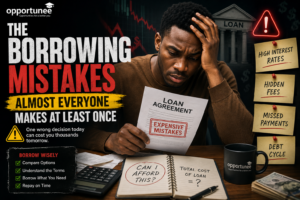
Common Mistakes to Avoid When Choosing a Loan
Even experienced borrowers can make costly mistakes.
Here are some of the most common:
Borrowing More Than You Need
Larger loans mean paying interest on money you didn’t actually need.
Borrow only the amount required for your intended purpose.
Choosing Based Only on Monthly Payments
Lower monthly payments often come with longer repayment terms, increasing the total amount you’ll repay.
Always compare the total loan cost, not just the monthly payment.
Ignoring the Fine Print
Loan agreements contain important information about fees, repayment obligations, penalties, and borrower rights.
Reading the terms carefully can prevent unpleasant surprises later.
Not Checking Your Credit Before Applying
Reviewing your credit report before applying allows you to identify potential issues and understand what loan offers you may qualify for.
Applying for Too Many Loans at Once
Submitting multiple applications in a short period may affect your credit profile in some credit reporting systems.
Instead, research lenders first and apply strategically.
Questions to Ask Before Signing a Loan Agreement
Before accepting any loan offer, consider these questions:
- What is the total amount I will repay?
- Is the interest rate fixed or variable?
- Are there any hidden fees?
- Can I repay the loan early without penalties?
- What happens if I miss a payment?
- Does this loan align with my financial goals?
If you don’t fully understand the terms, ask the lender for clarification before signing.