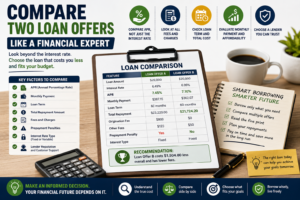
Introductions: Getting loans can help you realize your financial aspirations, regardless of whether you need to buy a house, acquire funds for education, increase the size of your business, or manage emergencies. Getting a loan without knowing about its functioning may cause financial problems due to debt and high costs of interests.
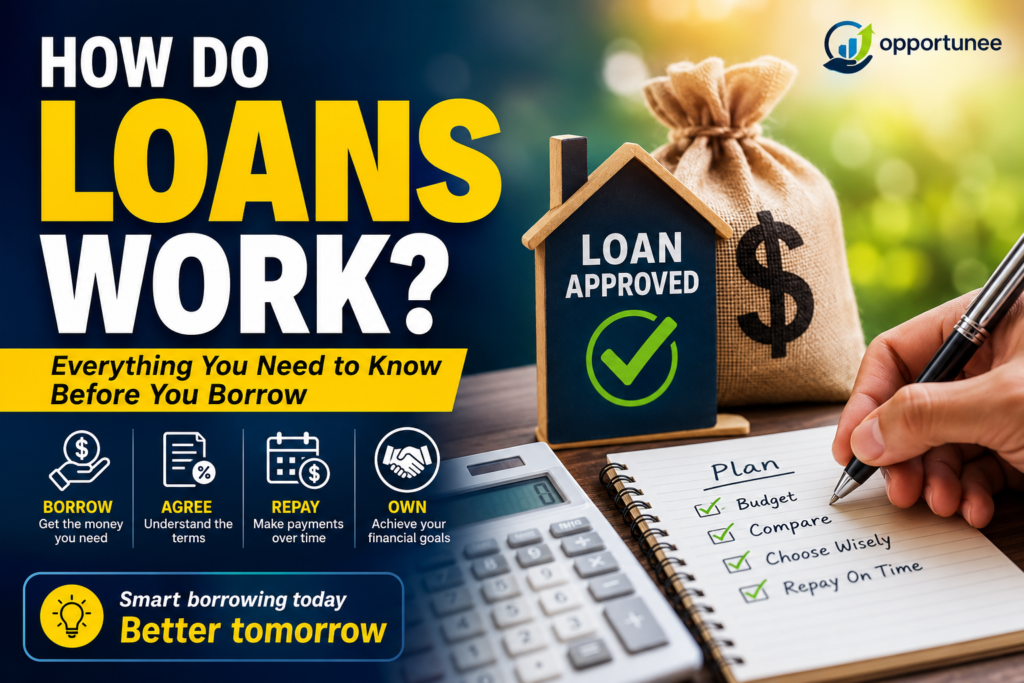
In simple terms, a loan is an amount of money borrowed from a lender under the condition of returning it in future with interest. Although it seems quite easy, each loan has its own terms and conditions, fees, and obligations that may greatly influence the final payment.
The following article will provide you with information on how loans function, types of loans, interests, and other details that are necessary before making a deal with lenders.
What Is a Loan?
A loan is an amount of money provided by a lender—such as a bank, credit union, online lender, or government agency—that a borrower agrees to repay according to predetermined terms.
Every loan includes four essential components:
- Principal: The amount you borrow.
- Interest: The cost of borrowing the money.
- Repayment period (Loan term): The time allowed to repay the loan.
- Monthly payments: Regular payments that reduce both the principal and interest.
For example, if you borrow $10,000 with a five-year repayment period and interest, you’ll make scheduled payments until the balance is fully paid.
The lender earns money through interest, while the borrower gains access to funds they may not currently have.
How Do Loans Work?
Although different loans have different features, most follow the same basic process.
1. You Apply
The borrower submits an application containing financial information such as:
- Income
- Employment
- Existing debts
- Credit history
- Purpose of the loan
Some lenders also verify identity and bank account information.
2. The Lender Reviews Your Application
The lender evaluates whether you’re likely to repay the loan.
They often consider:
- Credit score
- Debt-to-income ratio
- Employment stability
- Income level
- Previous repayment history
Borrowers with stronger financial profiles usually qualify for lower interest rates.
3. Loan Approval
If approved, you’ll receive a loan offer outlining:
- Loan amount
- Interest rate
- Repayment schedule
- Fees
- Penalties
- Total repayment cost
Read every detail before accepting.
4. Money Is Disbursed
Once you sign the agreement, the lender sends the money.
Depending on the loan, funds may go:
- Directly to your bank account
- To a school
- To a car dealership
- To a home seller
- To a contractor
5. You Repay the Loan
Repayment begins according to the agreed schedule.
Payments may be:
- Weekly
- Biweekly
- Monthly
Each payment usually covers:
- Interest
- A portion of the principal
As your balance decreases, less interest may accrue on many loan types.
Understanding Interest
Interest is the price you pay for borrowing money.
Think of it as the lender’s compensation for allowing you to use their funds.
For example:
Borrow $5,000 at an annual interest rate of 8%.
You won’t simply repay $5,000—you’ll repay the principal plus interest over the life of the loan.
The higher the interest rate, the more expensive the loan becomes.
This is why comparing interest rates before borrowing is so important.
Fixed vs. Variable Interest Rates
Not all loans charge interest the same way.
Fixed Interest Rate
A fixed rate remains the same throughout the loan.
Benefits include:
- Predictable monthly payments
- Easier budgeting
- Protection from rising market rates
Many personal loans and mortgages use fixed rates.
Variable Interest Rate
Variable rates can rise or fall over time.
Advantages:
- Lower starting rates
- Potential savings if rates decrease
Disadvantages:
- Monthly payments may increase
- Harder to budget
Variable-rate loans carry more uncertainty.
Common Types of Loans
Understanding loan types helps you choose the right option.
Personal Loans
Used for:
- Medical bills
- Home improvements
- Debt consolidation
- Weddings
- Emergencies
Most personal loans are unsecured, meaning no collateral is required.
Mortgage Loans
Mortgages help people buy homes.
The property serves as collateral.
If repayments stop, the lender may foreclose on the property.
Mortgage terms commonly range from 15 to 30 years.
Auto Loans
Auto loans finance vehicle purchases.
The vehicle secures the loan until it’s fully repaid.
Missing payments could lead to repossession.
Student Loans
Student loans help pay for:
- Tuition
- Books
- Accommodation
- Educational expenses
Repayment often begins after graduation or when studies end, depending on the loan program.
Business Loans
Business owners borrow funds for:
- Equipment
- Inventory
- Expansion
- Payroll
- Working capital
Approval often depends on business revenue, creditworthiness, and financial projections.
Secured vs. Unsecured Loans
One of the biggest differences between loans is whether collateral is required.
Secured Loans
Secured loans require an asset.
Examples include:
- Homes
- Vehicles
- Savings accounts
Because lenders face less risk, secured loans often have:
- Lower interest rates
- Higher borrowing limits
However, failing to repay could result in losing the pledged asset.
Unsecured Loans
No collateral is required.
Examples include:
- Personal loans
- Credit cards
- Some student loans
Because lenders assume more risk, interest rates are often higher.
Factors That Affect Loan Approval
Not every applicant qualifies for every loan.
Lenders commonly evaluate:
Credit Score
Higher credit scores generally improve approval chances and may qualify borrowers for better rates.
Income
Lenders want evidence that monthly income can comfortably cover loan payments.
Existing Debt
Too much existing debt may reduce your borrowing capacity.
Many lenders calculate your debt-to-income (DTI) ratio to assess affordability.
Employment Stability
A steady employment history can reassure lenders that you’ll be able to make consistent payments.
Loan Purpose
Some lenders consider how the borrowed money will be used, especially for business or education loans.
Costs Beyond Interest
Interest isn’t the only expense associated with borrowing.
Many loans may include additional charges, such as:
- Origination fees
- Late payment fees
- Early repayment penalties (for some loans)
- Processing fees
- Insurance requirements
- Administrative charges
Always review the loan disclosure to understand the full cost before accepting an offer.
What Happens If You Miss Loan Payments?
Missing loan payments can have serious consequences.
Depending on the lender and loan agreement, you may face:
- Late fees
- Additional interest charges
- Damage to your credit score
- Collection efforts
- Legal action in some cases
- Repossession or foreclosure for secured loans
If you’re struggling to make payments, contact your lender as soon as possible. Some lenders offer temporary hardship assistance or revised payment plans.
Tips Before Borrowing Money
Taking a loan should be a well-informed financial decision. Before you borrow:
- Borrow only what you genuinely need.
- Compare offers from multiple lenders.
- Understand the annual percentage rate (APR), which reflects the total borrowing cost, including certain fees.
- Read the loan agreement carefully.
- Ensure the monthly payment fits comfortably within your budget.
- Maintain an emergency fund whenever possible.
- Avoid taking on new debt while repaying an existing loan unless it’s part of a well-planned strategy, such as debt consolidation.
Responsible borrowing can help you achieve financial goals without creating unnecessary financial pressure.