Introduction: Learn how to determine whether a loan fits your financial situation. Discover the key factors to evaluate before borrowing and avoid taking on unnecessary debt.
Taking out a loan is often necessary for accomplishing various financial objectives. It could be purchasing a home, getting education, starting a business, or dealing with an unforeseen expenditure. However, not all loans are equally beneficial for borrowers. Ideally, the loan would resolve your financial problem without burdening you or compromising your future financial welfare. You have to assess your income, expenditures, ability to repay the loan, and overall costs of borrowing before taking out a loan.

Most individuals are concerned about getting approved quickly without thinking about the cost of borrowing. Often, the lender will approve more funds than you need and may be able to afford. That is why analyzing your financial state prior to borrowing is one of the wisest decisions one could make.
This article will explain how to evaluate whether the loan suits your financial situation, identify red flags, and what actions to take.
Start by Defining Why You Need the Loan
The first question to ask yourself isn’t “Can I get a loan?” It’s “Why do I need one?”
Loans are most beneficial when they help you achieve a meaningful financial objective or cover an essential expense. Borrowing without a clear purpose often leads to unnecessary debt.
Common reasons people borrow include:
- Buying a home
- Purchasing a vehicle
- Paying for higher education
- Consolidating existing debt
- Covering emergency medical expenses
- Financing home improvements
- Expanding a business
On the other hand, borrowing for non-essential spending—such as luxury purchases or impulse buying—can create financial strain long after the excitement of the purchase has faded.
Before applying, ask yourself whether the loan will improve your financial position or simply delay a financial problem.
Evaluate Your Current Financial Health
Understanding your finances is the foundation of responsible borrowing.
Take an honest look at your monthly income and expenses before deciding whether to take on a loan.
Start by calculating:
- Your total monthly income
- Essential living expenses
- Existing loan payments
- Credit card balances
- Savings contributions
- Emergency fund balance
After subtracting your regular expenses from your income, determine how much money remains each month.
This amount helps you estimate whether you can comfortably afford another monthly payment without sacrificing necessities or relying on additional borrowing.
Remember, your budget should leave room for unexpected expenses. If every dollar is already committed, adding another loan payment could increase financial stress.
Make Sure the Monthly Payment Fits Your Budget
One of the biggest mistakes borrowers make is focusing only on whether they qualify for a loan rather than whether they can comfortably repay it.
A loan payment should fit naturally into your monthly budget.
Ask yourself:
- Will I still be able to pay rent or mortgage?
- Can I continue paying utility bills on time?
- Will I have enough money for groceries and transportation?
- Can I continue saving for emergencies?
- Will this payment leave me financially stretched?
If making the loan payment requires cutting back on essential expenses or depending on future income that isn’t guaranteed, the loan may not be the right choice.
Financial flexibility is just as important as loan approval.
Understand the Total Cost of Borrowing
The amount you borrow is only part of the equation.
Every loan has a total borrowing cost that includes interest and, in some cases, additional fees.
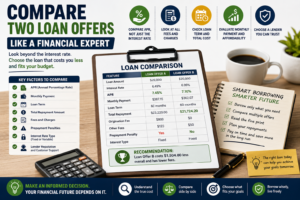
Before accepting a loan offer, compare:
Interest Rate
The interest rate determines how much you’ll pay for borrowing money.
Even a small difference in interest rates can significantly affect the total repayment amount over several years.
Annual Percentage Rate (APR)
The APR provides a broader picture of borrowing costs because it includes the interest rate and certain lender fees.
When comparing similar loan offers, the APR often provides a more accurate comparison than the interest rate alone.
Loan Term
Longer repayment periods usually reduce monthly payments but often increase the total interest paid.
Shorter repayment terms typically result in higher monthly payments while reducing overall borrowing costs.
Finding the right balance between affordability and total cost is important.
Additional Fees
Some lenders charge fees such as:
- Origination fees
- Processing fees
- Late payment charges
- Returned payment fees
- Prepayment penalties (on some loans)
Always review the loan disclosure carefully so there are no surprises after signing the agreement.
Consider Your Job and Income Stability
A loan is a long-term commitment, which means your future income matters just as much as your current income.
Ask yourself:
- Is my employment stable?
- Is my income consistent?
- Am I expecting major career changes?
- Could my earnings decrease in the near future?
If your income fluctuates significantly, consider whether you’ll still be able to make payments during slower months.
Borrowing based solely on optimistic expectations can become risky if circumstances change.
Think About Your Existing Debt
Taking on additional debt while already carrying several financial obligations can make repayment difficult.
Lenders often evaluate your debt-to-income (DTI) ratio, which compares your monthly debt payments to your monthly income.
Even if a lender approves your application, you should ask yourself whether another loan is truly manageable.
If you’re already struggling to keep up with existing payments, adding another loan may worsen the situation.
In some cases, consolidating higher-interest debts into a lower-interest loan may simplify repayment, but it’s important to compare the total cost before making that decision.
Do You Have an Emergency Fund?
Life is unpredictable.
Unexpected expenses such as medical bills, car repairs, or temporary job loss can make loan payments more difficult.
Having an emergency fund provides a financial cushion if your circumstances change.
If taking out a loan would leave you with no savings at all, you may want to reconsider the amount you’re borrowing or explore alternatives.
A healthy emergency fund can help you avoid relying on additional debt when unexpected costs arise.
Compare Different Loan Types Before Deciding
Not all loans are designed for the same purpose, and choosing the wrong one could increase your borrowing costs or make repayment more difficult. Matching the loan to your financial need is just as important as finding a competitive interest rate.
Here’s a quick overview of some common loan types:
Personal Loans
Personal loans are one of the most flexible borrowing options. They can be used for home improvements, medical bills, debt consolidation, weddings, or other significant expenses. Most personal loans have fixed interest rates and fixed monthly payments, making them easier to budget for.
Mortgage Loans
If you’re buying a home, a mortgage is typically the most suitable financing option. Mortgages generally offer longer repayment terms and lower interest rates than many unsecured loans because the property serves as collateral.
Auto Loans
Auto loans are designed specifically for purchasing vehicles. Since the car secures the loan, lenders often offer lower interest rates than those available on unsecured personal loans.
Student Loans
Student loans are intended for education-related expenses, including tuition, books, and living costs. Depending on the lender or program, they may include flexible repayment options or deferred payments while you’re still studying.
Business Loans
Business loans help entrepreneurs finance equipment, inventory, expansion, or operating expenses. If you’re borrowing for business purposes, using a dedicated business loan can make it easier to separate personal and business finances.
Selecting the right loan for your purpose can help you save money while reducing financial risk.
Watch for Warning Signs That a Loan May Not Be Right
Sometimes the biggest financial decision is choosing not to borrow.
Consider delaying or reconsidering a loan if:
- The monthly payment stretches your budget too thin.
- You’re borrowing to cover everyday living expenses.
- You don’t fully understand the loan terms.
- The lender pressures you to sign quickly.
- The loan includes unusually high fees or interest rates.
- You need another loan just to repay existing debt.
- You’re unsure how you’ll make the payments if your income changes.
If any of these situations apply, it may be worth exploring alternatives such as adjusting your budget, increasing your savings, or delaying the purchase until you’re in a stronger financial position.
Compare Multiple Loan Offers
One lender’s offer isn’t necessarily the best one available.
Before making a decision, compare several loan offers based on:
- Annual Percentage Rate (APR)
- Interest rate
- Loan term
- Monthly payment
- Total repayment amount
- Fees and charges
- Customer service reputation
- Flexibility for early repayment
A loan with a slightly higher monthly payment but a lower APR could save you hundreds—or even thousands—of dollars over the life of the loan.
Taking time to compare options is one of the simplest ways to reduce your borrowing costs.
Questions to Ask Before Signing a Loan Agreement
Never sign a loan agreement without understanding exactly what you’re agreeing to.
Ask yourself—and your lender—the following questions:
- What is the total amount I’ll repay over the life of the loan?
- Is the interest rate fixed or variable?
- Are there any origination or processing fees?
- What happens if I miss a payment?
- Can I repay the loan early without penalties?
- Are there late payment fees?
- Does the monthly payment comfortably fit my budget?
If you can’t confidently answer these questions, ask for clarification before signing. A trustworthy lender should be willing to explain the loan terms clearly.
Common Borrowing Mistakes to Avoid
Even financially responsible borrowers can make costly mistakes. Being aware of these common pitfalls can help you make better decisions.
Borrowing More Than You Need
It may be tempting to accept the maximum amount offered, but borrowing extra money means paying interest on funds you may not actually need.
Focusing Only on Monthly Payments
A lower monthly payment often comes with a longer repayment term, increasing the total interest paid over time.
Always compare the total cost of the loan—not just the monthly payment.
Ignoring Fees
Origination fees, processing charges, and late payment penalties can significantly increase borrowing costs.
Read the loan disclosure carefully to understand every fee involved.
Skipping the Fine Print
Loan agreements contain important details about repayment obligations, penalties, and borrower rights.
Taking a few extra minutes to read the terms can help prevent expensive surprises later.
Borrowing Without a Repayment Plan
Before accepting a loan, know exactly how you’ll make each payment.
A realistic repayment plan can help you stay on track and avoid unnecessary financial stress.
Alternatives to Borrowing
A loan isn’t always the only solution.
Depending on your situation, you might consider:
- Building your savings before making the purchase.
- Negotiating a payment plan with a service provider.
- Using an emergency fund for unexpected expenses.
- Delaying non-essential purchases until you can pay in cash.
- Looking for grants, scholarships, or employer assistance programs where applicable.
Exploring alternatives may help you avoid paying interest altogether.
Frequently Asked Questions
How do I know if I can afford a loan?
A loan is generally affordable if you can comfortably make the monthly payments while still covering essential living expenses, maintaining your savings, and managing your existing financial obligations.
Should I accept the first loan I’m approved for?
Not necessarily. Comparing offers from multiple lenders can help you find lower borrowing costs, better repayment terms, and fewer fees.
Is a longer loan term always better?
A longer repayment period reduces monthly payments but usually increases the total interest paid. Consider both affordability and overall cost before deciding.
What if I’m unsure about the loan agreement?
Don’t sign until you fully understand the terms. Ask the lender to explain anything that’s unclear and take time to review the agreement carefully.
Conclusion:
The right loan should support your financial goals—not become a source of ongoing financial pressure. Before borrowing, take time to evaluate your income, expenses, existing debt, and long-term plans. Compare loan offers carefully, understand the full cost of borrowing, and choose a repayment schedule that fits comfortably within your budget.
Remember, qualifying for a loan doesn’t automatically mean it’s the right financial decision. The best borrowing choices are based on careful planning, realistic budgeting, and a clear understanding of your obligations.
When you take the time to assess your financial situation before applying, you’re more likely to choose a loan that meets your needs today while protecting your financial well-being for the future.