
Introduction: The most important financial goals to set in your 20s, 30s, 40s, 50s, and beyond. Discover how to create wealth, eliminate debt, and plan for retirement at every stage of life.
Many people focus only on earning more money, but financial success is about much more than income. It’s about knowing how to manage what you earn, protect yourself from unexpected setbacks, and make steady progress toward long-term goals. Whether you’re just starting your career or planning for retirement, having clear financial priorities can make every decision more intentional.
This guide explains the financial goals that matter most at every stage of life and offers practical steps to help you stay on track.
Why Financial Goals Change Over Time
Your financial needs are closely tied to your stage of life.
A recent graduate may be focused on paying off student loans and building an emergency fund, while someone in their 40s may prioritize saving for retirement and their children’s education. Later in life, protecting wealth and generating reliable retirement income often become the main focus.
Although the specific goals change, the underlying principles remain the same:
- Spend less than you earn whenever possible.
- Save consistently.
- Avoid unnecessary debt.
- Invest for the future.
- Review your financial plan regularly.
These habits create a solid foundation regardless of your age.
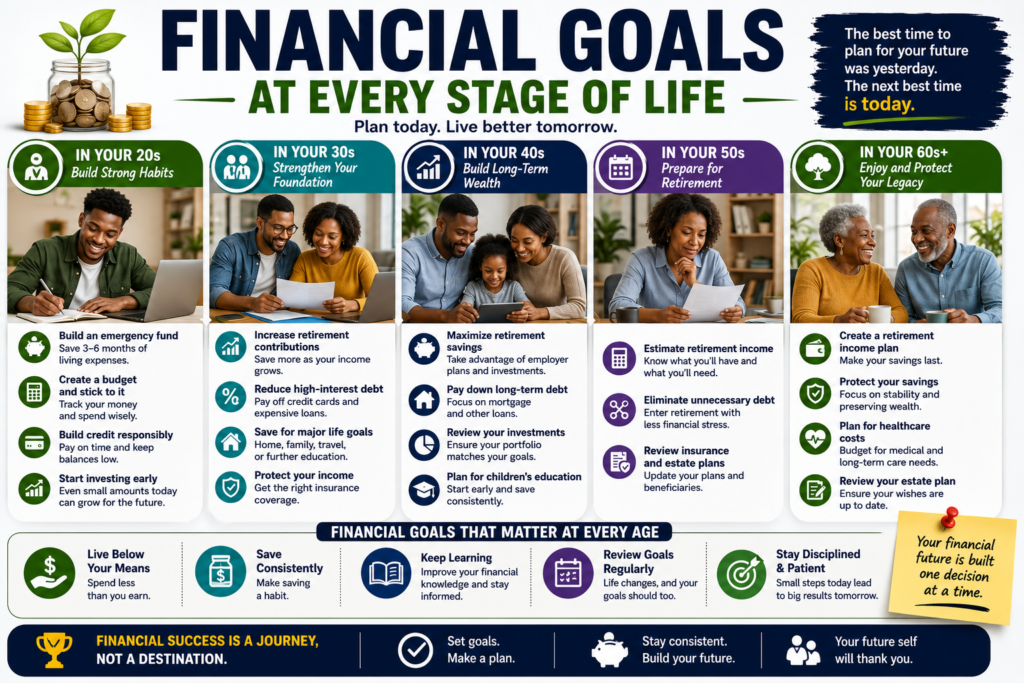
Financial Goals in Your 20s: Build Strong Habits
Your 20s are one of the most important decades for establishing healthy financial habits. Even if your income is modest, the decisions you make now can have a lasting impact.
Build an Emergency Fund
Unexpected expenses happen to everyone. A car repair, medical bill, or job loss can quickly become stressful if you have no savings.
Aim to build an emergency fund that covers at least three to six months of essential living expenses over time. If that feels overwhelming, start with a smaller milestone, such as saving your first $1,000.
Create and Follow a Budget
A budget helps you understand where your money goes and keeps spending aligned with your priorities.
Track your:
- Income
- Housing costs
- Food expenses
- Transportation
- Savings
- Debt payments
The goal isn’t to eliminate all enjoyment—it’s to spend intentionally.
Start Building Credit Responsibly
A positive credit history can make it easier to qualify for loans, rent an apartment, or secure favorable interest rates.
If you use credit, pay your bills on time and avoid carrying large balances.
Begin Investing Early
Time is one of the biggest advantages young investors have.
Even small, regular contributions to retirement or investment accounts can benefit from compound growth over many years.
Starting early often matters more than investing large amounts later.
Financial Goals in Your 30s: Strengthen Your Foundation
By your 30s, many people experience higher earnings but also greater financial responsibilities.
You may be buying a home, raising children, or advancing your career.
Increase Retirement Contributions
As your income grows, increase the amount you’re setting aside for retirement whenever possible.
Small increases today can make a significant difference over several decades.
Reduce High-Interest Debt
High-interest debt, particularly revolving debt such as credit cards, can slow your financial progress.
Focus on paying off balances while avoiding new unnecessary debt.
Save for Major Life Goals
Depending on your circumstances, this could include:
- Buying a home
- Starting a business
- Expanding your family
- Pursuing additional education
Setting separate savings goals for each objective can make them feel more achievable.
Protect Your Income
As your financial responsibilities grow, so does the importance of protecting your income.
Review whether you have appropriate insurance coverage, including health, disability, or life insurance if others depend on your income.
Financial Goals in Your 40s: Build Long-Term Wealth
Your 40s are often your highest earning years, making them an excellent time to accelerate wealth building.
Maximize Retirement Savings
Take advantage of employer-sponsored retirement plans or other long-term investment opportunities if available.
Review your retirement progress regularly to ensure you’re on track.
Pay Down Long-Term Debt
Reducing mortgage balances, personal loans, or other long-term obligations can improve your financial flexibility later in life.
Every extra payment toward principal may reduce future interest costs, depending on your loan terms.
Review Your Investment Portfolio
Your investments should reflect both your financial goals and your comfort with risk.
As retirement gets closer, many investors review whether their asset allocation still matches their time horizon.
Plan for Children’s Education
If you have children and plan to help pay for their education, consider developing a dedicated savings strategy rather than relying on future borrowing.
Planning early may reduce financial pressure later.
Financial Goals in Your 50s: Prepare for Retirement
Retirement may still be several years away, but your 50s are an important time to fine-tune your financial plan.
Estimate Your Retirement Income
Review your expected retirement income from savings, pensions, investments, or other sources.
Compare that estimate with your anticipated retirement expenses.
Identifying any shortfall early gives you more time to adjust.
Eliminate Unnecessary Debt
Entering retirement with less debt can reduce financial stress and improve cash flow.
Prioritize paying off high-interest balances while continuing to save for retirement.
Review Insurance and Estate Plans
As your financial situation changes, review your insurance coverage, update beneficiaries where necessary, and ensure important legal documents reflect your current wishes.
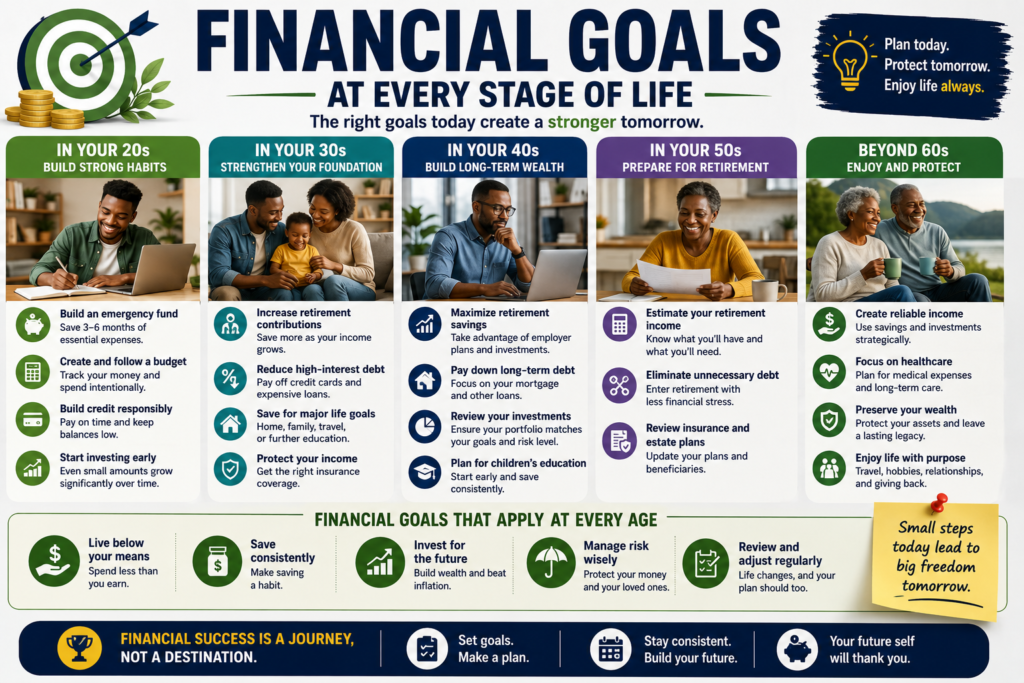
Financial Goals in Your 60s and Beyond: Protect What You’ve Built
By the time you reach your 60s, your financial priorities often shift from building wealth to preserving it. Retirement can last 20 years or more, making careful financial planning just as important as it was during your working years. Your focus should be on maintaining a reliable income, managing healthcare costs, and ensuring your savings support the lifestyle you want.
Rather than chasing high investment returns, many retirees benefit from balancing growth with stability. The goal is to make your money last while remaining prepared for unexpected expenses.
Create a Sustainable Retirement Income Plan
One of the biggest concerns during retirement is ensuring your income keeps pace with your living expenses.
Review all potential income sources, including:
- Retirement savings
- Pension income, if applicable
- Social Security or government retirement benefits, where available
- Investment income
- Part-time work or consulting, if desired
Understanding how these income sources work together can help you create a realistic retirement budget.
Prepare for Healthcare Costs
Healthcare expenses often increase with age.
Include costs such as:
- Health insurance premiums
- Prescription medications
- Routine medical care
- Long-term care, if needed
Planning for these expenses early can help prevent them from disrupting your retirement savings.
Preserve Your Wealth
Protecting the assets you’ve spent decades building becomes increasingly important.
Review your investment strategy periodically to ensure it matches your current goals and comfort with risk. Avoid making emotional investment decisions during market fluctuations, and keep enough accessible savings for short-term needs.
Plan Your Estate
Estate planning helps ensure your wishes are carried out and can make things easier for your loved ones.
Consider reviewing or creating:
- A will
- Beneficiary designations
- Powers of attorney
- Healthcare directives
As life circumstances change, update these documents to reflect your current wishes.
Financial Goals That Matter at Every Age
Although your priorities change throughout life, some financial goals remain important regardless of your age.
Live Below Your Means
Consistently spending less than you earn creates room for saving, investing, and preparing for unexpected expenses.
Avoid increasing your spending every time your income rises. Instead, direct a portion of any raise toward your long-term goals.
Build and Maintain an Emergency Fund
An emergency fund isn’t only for young adults. Unexpected expenses can happen at any stage of life.
Keeping several months’ worth of essential expenses in an accessible savings account can reduce the need to rely on credit during difficult times.
Save Consistently
Regular saving is often more effective than waiting until you can save large amounts.
Automatic transfers to savings or investment accounts can help build this habit over time.
Invest for Long-Term Growth
If your goals are years away, investing may help your money grow faster than keeping everything in a standard savings account. Your investment choices should reflect your goals, time horizon, and tolerance for risk.
Review Your Financial Plan Regularly
Major life events such as marriage, having children, changing jobs, buying a home, or retiring should prompt a review of your financial plan.
Even without major changes, reviewing your goals at least once a year can help keep you on track.
Common Financial Goal Mistakes to Avoid
Setting goals is important, but avoiding common mistakes is equally valuable.
Not Having Clear Goals
Vague goals like “save more money” are difficult to measure.
Instead, set specific goals such as:
- Save $5,000 for an emergency fund.
- Pay off a personal loan within two years.
- Increase retirement contributions by 2% this year.
Specific goals are easier to track and achieve.
Waiting Too Long to Start
Many people delay saving or investing because they believe they need a higher income first.
In reality, starting early—even with small amounts—can make a significant difference over time.
Ignoring Inflation
Prices tend to rise over time, reducing purchasing power.
When setting long-term financial goals, consider how inflation may affect future expenses and adjust your savings targets accordingly.
Taking on Unnecessary Debt
Borrowing for non-essential purchases can slow progress toward your financial goals.
Whenever possible, prioritize saving for discretionary expenses rather than financing them with high-interest debt.
Failing to Adjust Goals
Life rarely goes exactly as planned.
Your financial goals should evolve as your career, family responsibilities, income, and priorities change.
Being flexible doesn’t mean giving up on your goals—it means adapting them to your current reality.
Frequently Asked Questions
What is the most important financial goal to have?
The most important financial goal depends on your stage of life, but building an emergency fund and living within your means provide a strong foundation for almost every other financial objective.
How often should I review my financial goals?
Review your goals at least once a year or whenever you experience a major life event, such as changing jobs, getting married, buying a home, or retiring.
Should I focus on paying off debt or saving money?
Ideally, work on both. Building a modest emergency fund while paying down high-interest debt can improve your financial stability and reduce long-term borrowing costs.
Is it ever too late to start planning for retirement?
No. While starting earlier offers more time for savings to grow, taking action at any age can improve your financial security and help you prepare for retirement.
In Conclusion:
Financial success isn’t determined by how much money you earn—it’s shaped by the decisions you make throughout your life. Setting meaningful financial goals at every stage helps you stay focused, prepare for change, and build lasting financial confidence.
Whether you’re beginning your career, raising a family, approaching retirement, or enjoying your retirement years, your financial goals should reflect your current priorities while keeping an eye on the future. Start with realistic objectives, review them regularly, and celebrate your progress along the way.
The earlier you develop good financial habits, the easier it becomes to adapt as life changes. With consistent planning and thoughtful decision-making, each stage of life can bring you closer to lasting financial security and greater peace of mind.