
You don’t need a six-figure salary to save for a rainy day. Here’s how to start—with whatever you have.
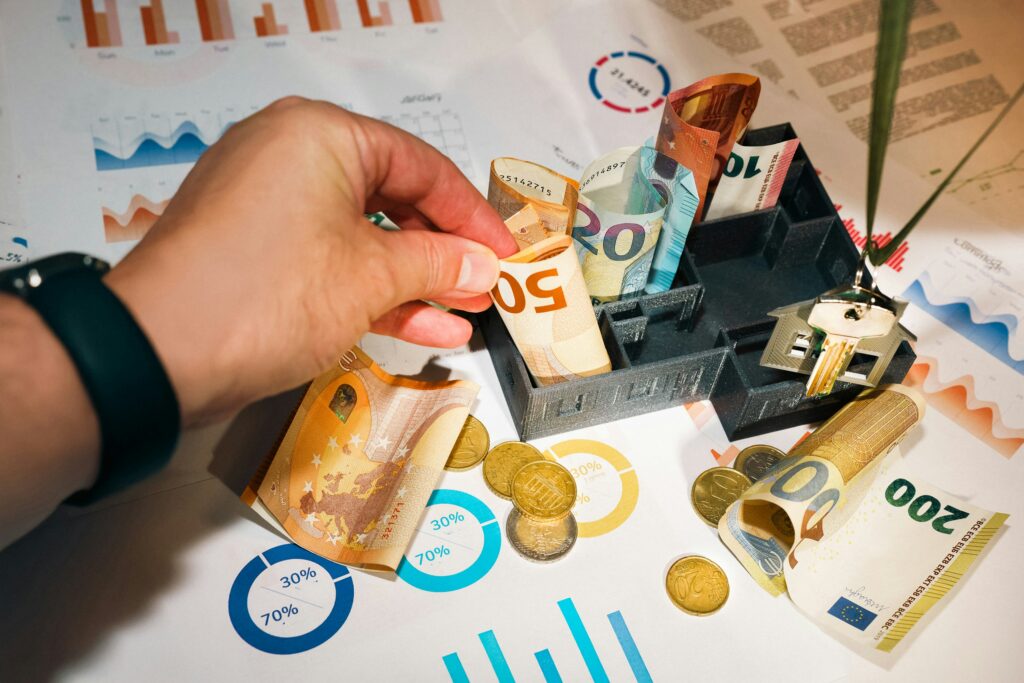
Introduction: Building an emergency fund on a low income is a matter of incremental consistency. Start by setting a small, achievable goal of saving $500 to $1,000, calculate your bare-bones monthly essentials, and redirect any loose change or windfalls into a dedicated, separate savings account using automated transfers.
You don’t need a six-figure salary to save for a rainy day. Here’s how to start—with whatever you have. Here is a step-by-step guide on how to handle your money.
1. Calculate Your Survival Number
Forget the 3-to-6-months rule—for now.
When money is tight, you don’t need to save for your entire lifestyle. You need to save for your survival—the bare minimum required to keep a roof over your head and food on the table.
Your survival number includes only:
- Rent or mortgage
- Utilities (electricity, water, gas)
- Basic groceries
- Essential transportation (fuel or bus fare to work)
- Minimum debt payments to avoid default
What it excludes: Streaming subscriptions, dining out, gym memberships, new clothes, entertainment, and coffee shop runs.
Action step: Review your last 3 months of bank statements. Highlight only the essentials. Add them up. That’s your survival number. Multiply by 3—that’s your ultimate goal. But you won’t get there overnight.
2. Set an Attainable Initial Goal
Big goals are motivating. Huge goals are paralyzing.
Instead of aiming for 3 months of expenses right out of the gate, set a highly specific, small target:
| Milestone | Amount (USD) | Amount (KES) | What It Covers |
|---|---|---|---|
| Level 1 | $500 | KSh 5,000 | Minor car repair or medical copay |
| Level 2 | $1,000 | KSh 20,000 | Most unexpected household emergencies |
| Level 3 | 1 month of survival expenses | 1 month of survival expenses | True short-term job loss buffer |
| Level 4 | 3 months of survival expenses | 3 months of survival expenses | Full financial safety net |
Why this works: Hitting that first $500 gives you a psychological win. Research shows that people who reach their first savings milestone are 70% more likely to continue saving.
3. Automate the “Pay Yourself First” Rule
If you don’t see it, you won’t spend it.
Treat your emergency fund like a bill—one that’s just as non-negotiable as rent or utilities. Even if you can only spare $5 or KSh 200 per paycheck, set up an automatic transfer so the money moves into your savings account before you have a chance to spend it.
How to set it up:
- Schedule the transfer for the same day your paycheck hits (ideally within 24 hours).
- Start with whatever amount you can sustain—even $10 per week adds up to $520 per year.
- Increase the amount gradually whenever you get a raise or pay off a debt.
The psychology: Automation removes decision fatigue. You’re not fighting temptation every month—you’re letting technology do the heavy lifting.
4. Separate Survival Money from Daily Money
Out of sight, out of mind—and out of your spending account.
Your emergency fund should live in a completely separate account from your everyday checking account. This creates friction, making it harder to dip into savings for non-emergencies.
Where to park your money:
| Region | Best Option | Why |
|---|---|---|
| Kenya | Money Market Fund (MMF) | Competitive returns (10–14% p.a.), accessible within 24–48 hours |
| US | High-Yield Savings Account (HYSA) | 4–5% APY, FDIC-insured, liquid |
| Anywhere | Separate savings account at a different bank | Prevents impulsive transfers |
Key rule: Your emergency fund is not an investment. It should be safe, liquid, and boring. No stocks, no crypto, no lock-in periods.
5. Leverage Windfalls and Side Hustles
Unexpected money = unexpected progress.
When you receive a tax refund, work bonus, cash gift, or payment from a side gig, put it directly into your emergency fund—at least until you hit your first milestone.
The math:
- A $300 tax refund = 60% of your first $500 goal.
- A $50/week side hustle = $2,600 per year (enough for 3 months of survival expenses for many households).
Action step: Open a separate “windfall” sub-account or simply transfer 100% of all unexpected income to your emergency fund until you hit $500. After that, you can adjust to a 50/50 split.
6. Audit and Eliminate “Budget Leaks”
Small leaks sink big ships.
The average person spends **over $200 per month** on subscriptions they rarely use—streaming platforms, gym memberships, app subscriptions, and premium services. That’s $2,400 per year that could be in your emergency fund.
How to conduct your audit:
- Download your bank or mobile money statement for the last 60 days.
- Highlight every transaction that is not a survival expense.
- Categorize into:
- Cancel immediately (unused subscriptions)
- Reduce frequency (dining out from 3x to 1x per week)
- Replace (gym membership → outdoor running)
Real-world example:
- Daily coffee: $5
- Daily lunch out: $15
- Total: $20/day × 22 workdays = **$440/month**
Swap to home-brewed coffee and packed lunches, and you’ve nearly reached your first $500 milestone in just 30 days.
7. Use the “Round-Up” or Loose Change Method
Every cent counts.
The round-up method involves saving the spare change from your daily transactions. If you buy groceries for $4.50, you round up to $5 and save the $0.50 difference.
How to implement:
| Method | How It Works |
|---|---|
| Manual | At the end of each day, transfer your loose change (coins or the decimal remainder in your bank balance) to savings |
| Automated apps (US) | Acorns, Chime, or Qapital round up purchases and save/invest the difference |
| Manual (Kenya) | Use M-Pesa to transfer daily remittances to a savings pot |
The result: Consistent daily round-ups average $30–$100 per month—without you ever feeling the pinch.
8. Implement a “No-Spend” Challenge
A temporary reset with permanent benefits.
A no-spend challenge involves committing to a specific period—7, 14, or 30 days—during which you only spend on survival necessities. All discretionary spending is off-limits.
How to run one:
- Define the rules: List what’s allowed (groceries, rent, utilities, transport to work) and what’s forbidden (takeout, new clothes, entertainment, coffee shops).
- Set a duration: Start with 7 days if you’re a beginner.
- Track the savings: At the end, calculate exactly how much you saved.
- Deposit it all: Transfer the entire amount to your emergency fund.
Expected yield: A 7-day challenge typically saves $50–$150, giving your fund an immediate boost.
9. Sell Unused Items and Declutter
Your clutter is someone else’s treasure—and your emergency fund.
Walk through your home right now. How many items are collecting dust? Old phones, furniture, clothes, books, and electronics all have resale value.
What sells best:
- Electronics (phones, tablets, gaming consoles)
- Furniture and home appliances
- Clothing and accessories in good condition
- Books, toys, and collectibles
Where to sell:
| Region | Platforms |
|---|---|
| Kenya | Facebook Marketplace, Jiji.co.ke, WhatsApp buy/sell groups |
| US | eBay, Facebook Marketplace, Craigslist, Poshmark |
Pro tip: Aim to list at least 5 items per week. A typical decluttering sale can net $100–$500—catapulting you toward your first milestone.
10. Reduce Fixed Monthly Bills
One-time negotiations = permanent monthly savings.
While discretionary spending is easier to cut, fixed bills like insurance, utilities, and internet often have hidden room for negotiation.
What to negotiate:
| Bill | Tactic |
|---|---|
| Insurance | Call and ask for a loyalty discount, or shop around for competitive quotes |
| Internet/Phone | Review data usage and downgrade to a cheaper plan; mention you’re considering cancelling to unlock retention discounts |
| Utilities | Unplug devices when not in use, switch to energy-efficient bulbs, and use appliances during off-peak hours where applicable |
| Bank fees | Switch to a bank or mobile money provider with zero monthly maintenance fees |
The math: Negotiating a $20 reduction on internet and a $15 reduction on your phone plan saves **$420 per year**—more than your initial $500 goal.
11. Adopt the “Replacement” Strategy
Swap, don’t stop.
Instead of eliminating pleasures entirely, practice substitution. This preserves your quality of life while slashing monthly outflows.
Substitution examples:
| Instead of… | Try… | Monthly Savings |
|---|---|---|
| Dining out | Potluck dinner with friends | $50–$100 |
| Gym membership | Outdoor running or YouTube workouts | $30–$60 |
| Store-bought coffee | Home brewing setup (one-time cost) | $40–$80 |
| Brand-name groceries | Store-brand or generic equivalents | $20–$50 |
| Cable TV | One low-cost streaming service or free ad-supported platforms | $50–$100 |
Cumulative effect: With 4–5 substitutions, you can easily free up $100+ per month for your emergency fund—without feeling deprived.
Bonus: How to Trim the Fat and Protect Your Fund
Separating survival costs from discretionary spending is an ongoing discipline.
Here are 4 rules to live by:
- Ask the “What If” question: If I lost my income tomorrow, would I still pay for this? If the answer is no, it’s discretionary.
- Use the 24-hour rule: Before making any non-essential purchase, wait 24 hours. Most impulse purchases lose their appeal.
- Track every cent for 30 days: Use a notebook, spreadsheet, or budgeting app. Awareness alone reduces spending by 15–20%.
- Define what an “emergency” is: Your fund is for job loss, major car repairs, or urgent medical bills—not for holidays, new phones, or “really good sales.”
The Bottom Line
You don’t need more money. You need a plan.
Building an emergency fund on a low income is not about deprivation—it’s about intentional redirection. Every dollar or shilling you redirect from a non-essential to your emergency fund is a vote for your future financial security.
Start with what you have, where you are. Even $1 or KSh 50 per day builds a foundation. Consistency trumps amount every single time.
Your emergency fund is not a luxury. It’s your personal insurance policy against life’s inevitable surprises. And you can build it—starting right now.
This article was reviewed for accuracy and clarity by our editorial team. opportunee does not offer advisory or brokerage services, nor does it recommend specific financial products. Always do your own research before choosing a savings vehicle.