Introduction: To pay off a debt faster without necessarily boosting your income, aggressively cut non-essential spending to free up some cash. Apply the Debt Avalanche Method to minimize total interest paid, or use the Debt Snowball Strategy to eliminate smaller balances first for quick, motivational wins
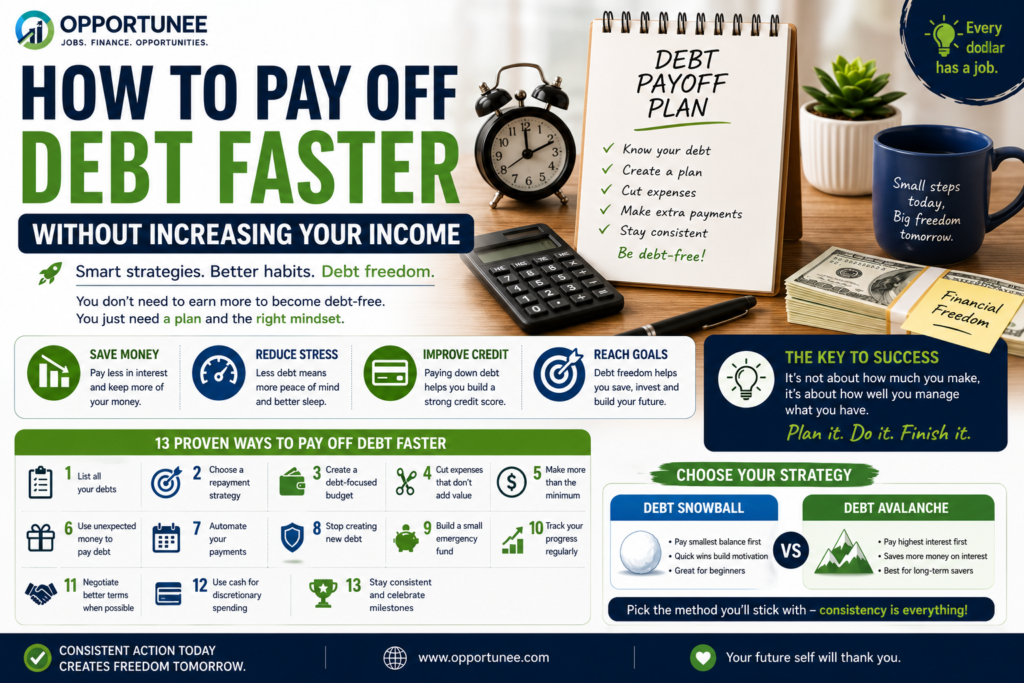
How to Pay Off Debt Faster Without Increasing Your Income
Debt can feel like a heavy burden, especially when your income barely covers your monthly expenses. Many people believe the only way to become debt-free is to earn more money. While increasing your income can certainly help, it’s not the only solution. In reality, thousands of people have successfully paid off debt by changing how they manage the money they already earn.
The secret isn’t working longer hours or finding a second job—it’s creating a smarter repayment strategy, reducing financial leaks, and making every dollar work harder. Small, consistent actions can significantly reduce the amount of interest you pay and help you eliminate debt months or even years earlier.
Whether you’re dealing with credit card balances, personal loans, student loans, or other forms of debt, this guide will show you practical ways to accelerate your repayment without increasing your income.
Why Paying Off Debt Early Matters
The longer you carry debt, the more interest you pay. High-interest debt, especially credit cards, can make it difficult to save, invest, or achieve other financial goals.
Paying off debt faster can help you:
- Save money on interest.
- Improve your credit profile.
- Reduce financial stress.
- Free up cash for savings and investing.
- Reach financial independence sooner.
Every extra payment you make today can reduce the total cost of your debt over time.
Step 1: Know Exactly What You Owe
Before creating a repayment plan, list every debt you have.
Include:
| Debt | Balance | Interest Rate | Minimum Payment |
|---|---|---|---|
| Credit Card | $3,200 | 24% | $95 |
| Personal Loan | $6,000 | 12% | $180 |
| Car Loan | $8,500 | 8% | $260 |
Having a complete picture helps you decide which debts to tackle first.
Quick Win: Keep this list updated every month to track your progress and stay motivated.
Step 2: Choose a Debt Repayment Strategy
There are two popular methods for paying off debt faster.
Debt Snowball Method
With the debt snowball method, you pay off the smallest debt first while making minimum payments on the rest.
Once the smallest debt is gone, roll that payment into the next smallest balance.
Best for:
- People who need motivation.
- Those who enjoy seeing quick progress.
Debt Avalanche Method
With the debt avalanche method, you focus on the debt with the highest interest rate first.
This approach usually saves more money over time because it reduces interest costs.
Best for:
- People focused on minimizing interest.
- Long-term planners.
Comparison
| Snowball | Avalanche |
|---|---|
| Pays smallest balance first | Pays highest interest first |
| Builds motivation quickly | Saves the most money |
| Better for beginners | Better for disciplined savers |
Choose the method you’ll stick with consistently.
Step 3: Stop Creating New Debt
Paying off debt while continuing to borrow is like trying to fill a bucket with a hole in the bottom.
Consider these habits:
- Pause unnecessary credit card spending.
- Avoid buy-now-pay-later purchases unless essential.
- Delay non-essential shopping.
- Pay with cash or debit for discretionary spending.
Breaking the cycle of borrowing is essential for long-term success.
Step 4: Create a Debt-Focused Budget
A budget gives every dollar a purpose.
Start by listing:
- Monthly income.
- Essential expenses.
- Debt payments.
- Savings.
- Discretionary spending.
Look for categories where you can redirect money toward debt repayment.
Examples include:
- Eating out less.
- Cancelling unused subscriptions.
- Reducing impulse purchases.
- Choosing free entertainment.
Even an extra $50 each month can make a meaningful difference over time.
Step 5: Make More Than the Minimum Payment
Minimum payments are designed to keep you in debt longer.
Whenever possible, pay even a little extra.
For example:
- Add $25.
- Add $50.
- Round up your payment.
- Make biweekly payments instead of monthly.
Small additional payments reduce both the loan balance and the interest charged.
Step 6: Use Unexpected Money Wisely
Instead of spending unexpected income, use it to reduce debt.
Examples include:
- Tax refunds.
- Performance bonuses.
- Cash gifts.
- Cashback rewards.
- Refunds.
- Overtime pay.
Applying these windfalls directly to your debt can shorten your repayment timeline without affecting your regular budget.
Step 7: Cut Expenses That Don’t Add Value
Review your monthly expenses honestly.
Ask yourself:
- Do I use this subscription?
- Can I negotiate this bill?
- Am I paying for convenience instead of necessity?
Common areas to reduce spending include:
- Streaming services.
- Gym memberships.
- Premium phone plans.
- Frequent takeaway meals.
- Impulse online shopping.
Redirect the savings toward your highest-priority debt.
Step 8: Automate Your Payments
Automation helps you stay consistent and avoid late fees.
Benefits include:
- Never missing a due date.
- Protecting your credit score.
- Building disciplined financial habits.
If possible, schedule automatic payments immediately after payday.
Step 9: Build a Small Emergency Fund
It may seem strange to save while paying off debt, but a small emergency fund can prevent you from borrowing again when unexpected expenses arise.
Aim for an initial emergency fund of $500 to $1,000, then continue growing it after high-interest debt is under control.
Step 10: Track Your Progress
Seeing your debt shrink can be incredibly motivating.
Create a simple tracker that shows:
- Original balance.
- Current balance.
- Amount paid.
- Remaining months.
You can use:
- A spreadsheet.
- A budgeting app.
- A printable debt tracker.
- A whiteboard at home.
Celebrate milestones along the way to stay motivated.
Common Mistakes That Slow Debt Repayment
Avoid these common pitfalls:
- Paying only the minimum payment.
- Ignoring interest rates.
- Using credit cards while repaying debt.
- Skipping payments.
- Failing to budget.
- Spending bonuses instead of reducing debt.
- Comparing your progress with others.
Debt repayment is a personal journey. Focus on steady progress rather than perfection.
Debt Repayment Checklist
Use this checklist to stay on track:
✔ List every debt.
✔ Choose a repayment strategy.
✔ Build a monthly budget.
✔ Stop unnecessary borrowing.
✔ Make extra payments whenever possible.
✔ Save a small emergency fund.
✔ Review your progress every month.
✔ Celebrate each debt you eliminate.
Frequently Asked Questions
Is it possible to pay off debt without earning more money?
Yes. Many people become debt-free by budgeting effectively, reducing unnecessary expenses, making extra payments, and avoiding new debt.
Which repayment method is better?
The debt snowball method provides quick wins that can improve motivation, while the debt avalanche method usually saves more money on interest. The best choice is the one you can consistently follow.
Should I save money or pay off debt first?
A balanced approach often works best. Building a small emergency fund while focusing on high-interest debt can help prevent additional borrowing when unexpected expenses occur.
Finally:
Becoming debt-free doesn’t always require a higher salary—it requires a smarter strategy. By understanding your debts, creating a realistic budget, choosing an effective repayment method, and consistently directing extra money toward your balances, you can make meaningful progress without increasing your income.
Remember that every extra payment, no matter how small, reduces your debt and moves you closer to financial freedom. Focus on consistency rather than perfection, celebrate your milestones, and avoid creating new debt along the way.
Financial freedom is built through daily habits, not overnight success. Start with one change today, stay committed to your plan, and you’ll be surprised how much progress you can make over time.