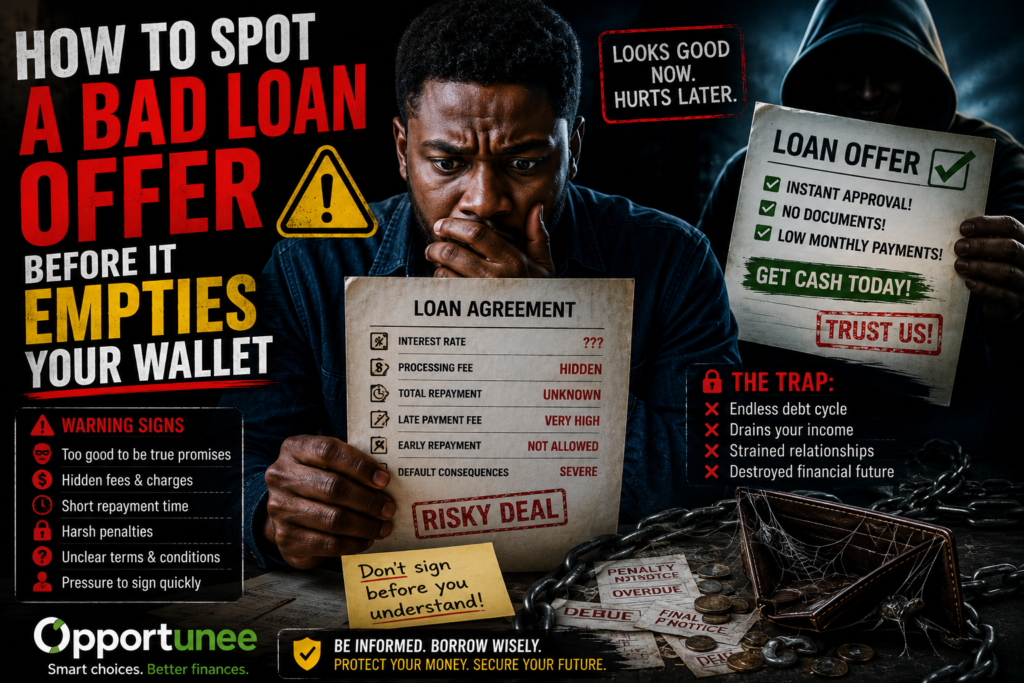
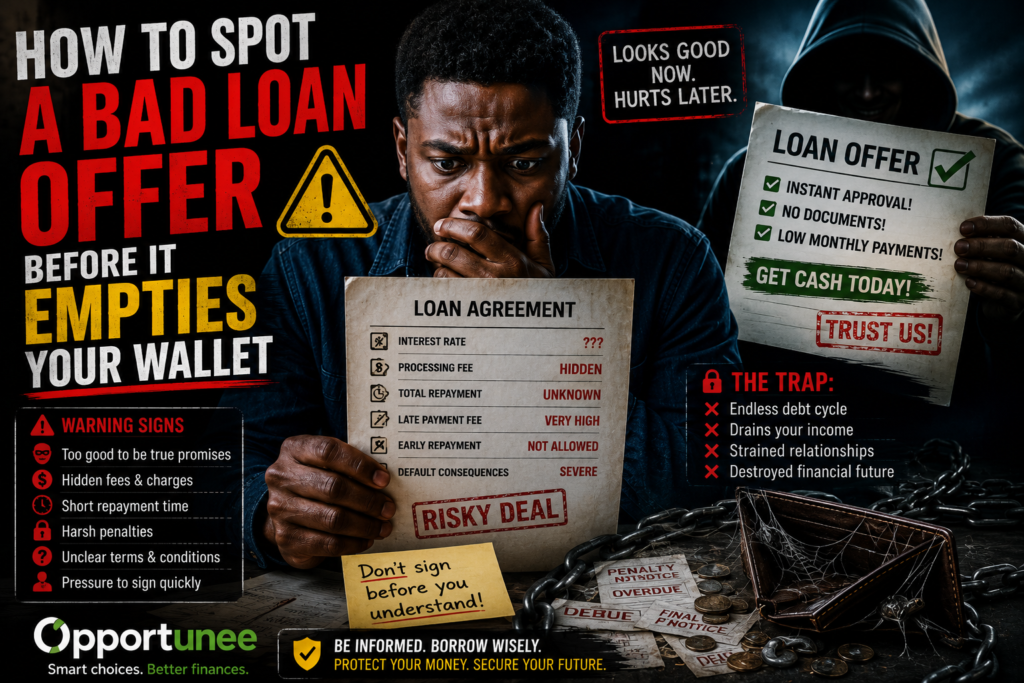
Introduction: Spotting a bad loan offer early saves you from hidden fees and debt traps. To protect your wallet, check the Consumer Financial Protection Bureau for borrowing tips. Always scrutinize these key warning signs before signing: [1, 2, 3, 4]
Borrowing money can be a smart financial decision when it helps you solve a genuine problem or achieve an important goal. Unfortunately, not every loan offer is designed with your best interests in mind. Some loans appear attractive because they promise instant approval, low monthly payments, or easy access to cash, but once you read the fine print—or worse, once you’ve already signed—you discover hidden costs, strict repayment terms, or penalties that make the loan far more expensive than expected.
A bad loan doesn’t always announce itself. It rarely comes with a warning label saying, “This loan will cause financial stress.” Instead, it hides behind persuasive advertising, complicated contracts, and promises that sound too good to ignore. Learning how to identify these warning signs before accepting a loan can protect your finances, your credit history, and your peace of mind.
Whether you’re considering a bank loan, a mobile loan, a SACCO loan, or another form of credit, knowing what separates a fair loan from a risky one will help you make informed borrowing decisions.
What Makes a Loan Offer Bad?
A bad loan isn’t necessarily one with the highest interest rate. Instead, it’s a loan whose terms place an unreasonable financial burden on the borrower or fail to provide clear information about the true cost of borrowing.
A loan becomes problematic when it encourages you to borrow more than you need, hides important fees, includes unfair repayment conditions, or creates a high risk of falling into a cycle of debt.
The best lenders want borrowers to understand their obligations. If the terms are confusing or important details are difficult to find, that’s already a reason to slow down.The Biggest Warning Signs to Watch For
Before signing any loan agreement, look for these common red flags.
The Total Cost Isn’t Clearly Explained
One of the easiest ways to identify a poor loan offer is by asking a simple question:
“How much will I repay in total?”
If the answer is vague or difficult to obtain, think carefully before proceeding.
A trustworthy lender should clearly explain:
- The amount you’re borrowing.
- The interest charged.
- Applicable fees.
- Your repayment schedule.
- The total amount you’ll repay.
If you have to calculate everything yourself or keep asking for clarification, the loan deserves closer scrutiny.
The Focus Is Only on Monthly Payments
Advertisements often highlight low monthly repayments because they sound affordable.
However, lower monthly payments don’t always mean a cheaper loan.
Longer repayment periods may reduce each monthly instalment while increasing the total amount paid over time.
Always compare the overall borrowing cost—not just the monthly figure.
Hidden Fees Appear Late in the Process
Some borrowers only discover extra charges after they’ve nearly completed the application.
These charges may include:
- Processing fees.
- Administration fees.
- Insurance costs where applicable.
- Late payment penalties.
- Early repayment charges where permitted.
A transparent lender explains these costs before you commit.
If It Sounds Too Good to Be True, It Probably Is
Be cautious of advertisements promising:
- Guaranteed approval.
- Extremely low borrowing costs without explanation.
- Instant access to very large loan amounts.
- “No questions asked” lending.
Responsible lending involves assessing whether borrowers can reasonably repay the loan.
Promises that ignore this reality deserve extra caution.
Pressure to Sign Quickly
A common sales tactic is creating urgency.
You may hear statements like:
- “This offer ends today.”
- “Apply now before it’s too late.”
- “Sign immediately to qualify.”
While some promotions have genuine deadlines, you should never feel pressured to sign before understanding the agreement.
Good financial decisions rarely benefit from unnecessary haste.
The Repayment Schedule Doesn’t Match Your Income
Imagine receiving your salary once a month while your loan requires weekly repayments.
Even if the loan itself appears affordable, the repayment schedule may create unnecessary pressure on your cash flow.
Before borrowing, compare the repayment dates with your expected income.
A suitable loan should fit comfortably into your budget rather than forcing you to constantly rearrange your finances.
You Don’t Understand the Agreement
Never sign a contract simply because someone tells you it’s “standard.”
If parts of the agreement seem confusing, ask questions until you’re satisfied.
Pay particular attention to:
- Interest calculations.
- Payment due dates.
- Penalties.
- Default procedures.
- Conditions for early repayment.
Understanding these terms today is much easier than dealing with unexpected consequences later.
Borrowing More Than You Actually Need
Sometimes lenders approve a higher amount than you requested.
While receiving extra money may feel like good news, remember that every additional amount borrowed usually increases your repayment obligation.
Borrowing should solve a financial need—not create a larger debt than necessary.
Accept only the amount you genuinely require.
Comparing Loan Offers the Smart Way
Rather than choosing the first available lender, compare several offers side by side.
| Feature | Loan A | Loan B |
|---|---|---|
| Amount Received | ||
| Total Repayment | ||
| Repayment Period | ||
| Fees | ||
| Late Payment Terms | ||
| Early Repayment Conditions |
Looking at the complete picture often reveals differences that advertisements don’t highlight.
Real-Life Scenario
Imagine two borrowers each need funds for home repairs.
The first borrower accepts the first loan available because approval is immediate.
The second borrower spends thirty minutes comparing two or three lenders, reviews the repayment terms, asks about fees, and calculates the total repayment.
Both receive the money they need, but the second borrower has a much clearer understanding of the financial commitment and is less likely to face unpleasant surprises.
Sometimes the best financial decision isn’t finding money faster—it’s taking a little longer to choose wisely.
Questions Every Borrower Should Ask
Before signing any loan agreement, ask:
- What is the total repayment amount?
- Are there any additional fees?
- What happens if I miss a payment?
- Can I repay early if my financial situation improves?
- Does the repayment schedule match my income?
- Have I compared other lenders?
These questions may seem simple, but they can help you avoid expensive borrowing mistakes.
Common Mistakes That Empty Borrowers’ Wallets
Many financial problems begin with decisions that seemed harmless at the time.
Avoid these common mistakes:
- Borrowing because the money is available rather than because it’s necessary.
- Ignoring the loan agreement.
- Comparing interest rates but ignoring fees.
- Taking multiple loans at the same time without a repayment strategy.
- Borrowing to finance unnecessary spending.
- Assuming future income will automatically solve today’s borrowing decisions.
Responsible borrowing begins long before the first repayment is due.
How to Protect Yourself
You don’t need to be a financial expert to recognize a good loan.
Develop these habits:
- Compare multiple lenders.
- Read every loan agreement carefully.
- Calculate the total repayment amount.
- Borrow only what you need.
- Ensure repayments fit comfortably within your budget.
- Keep copies of your loan documents.
These simple steps reduce the risk of borrowing more than you can comfortably manage.
Frequently Asked Questions
How can I tell if a loan is too expensive?
Look beyond the advertised interest rate and calculate the total amount you’ll repay, including any fees and charges.
Should I choose the fastest loan?
Not necessarily. Speed is useful during genuine emergencies, but it shouldn’t replace careful comparison of borrowing costs and repayment terms.
Is it safe to accept the first loan offer?
It’s usually better to compare several lenders before making a decision. Even small differences in fees or repayment terms can significantly affect the total cost.
What should I do if I don’t understand part of the agreement?
Ask the lender for clarification before signing. Never agree to terms you don’t fully understand.
ALL IN ALL,
A loan should provide financial support—not become a source of ongoing stress. The best way to avoid a bad loan offer is to slow down, ask questions, compare alternatives, and understand exactly what you’re agreeing to before you sign. Don’t let attractive advertising or fast approvals distract you from the details that matter most.
Remember, the smartest borrower isn’t the one who gets approved the fastest. It’s the one who understands the full cost of borrowing, chooses a loan that fits their financial situation, and repays it responsibly. Taking a little extra time before signing today can save you money, protect your financial future, and help you avoid costly mistakes tomorrow.
Disclaimer: This article is for informational purposes only and should not be considered financial or legal advice. Loan products, fees, eligibility requirements, and repayment terms vary between lenders. Always review the loan agreement carefully and seek independent advice where necessary before borrowing.