
Introduction: Mobile loans have transformed access to credit in Kenya. With just a smartphone, borrowers can receive funds within minutes through platforms such as M-Shwari, KCB M-PESA, Tala, Branch, Timiza, Zenka, and several digital lenders. While these loans provide quick financial relief during emergencies, they can quickly become expensive when repayments are delayed. Interest charges, service fees, and penalties can accumulate, making it harder to regain financial stability.
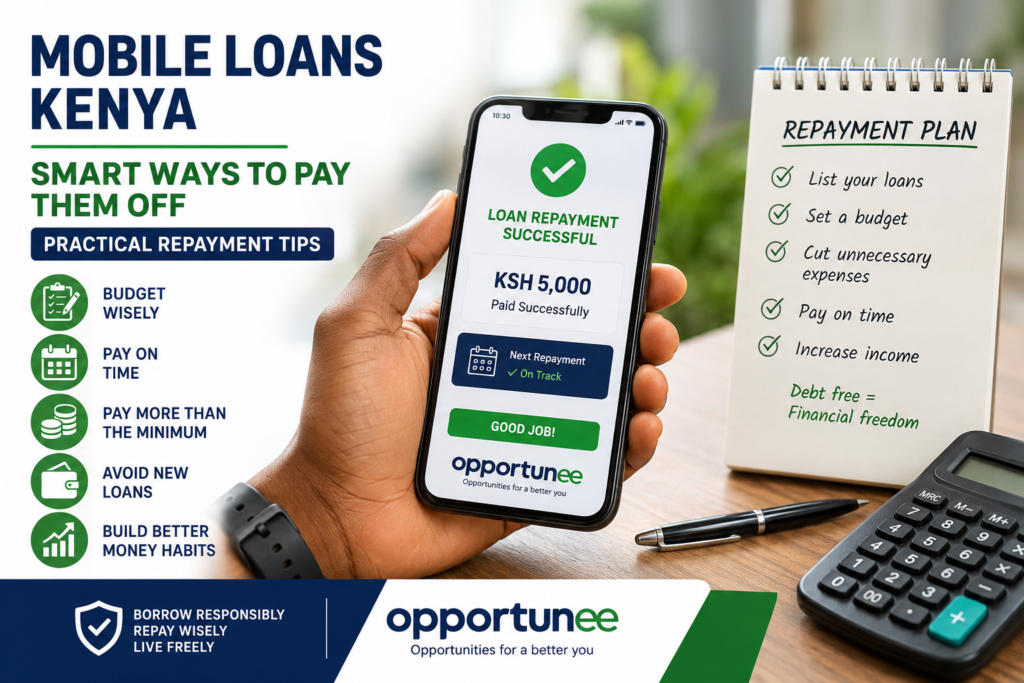
Why Mobile Loans Become Difficult to Repay
Understanding why repayment becomes challenging is the first step toward solving the problem.
Many borrowers fall behind because they:
- Borrow more than they actually need.
- Take multiple loans from different apps simultaneously.
- Use loan money for non-essential spending.
- Fail to budget before borrowing.
- Ignore repayment dates.
- Depend on new loans to clear old ones.
Digital loans are designed for short-term borrowing. When they’re treated as long-term income replacements, financial pressure builds quickly.
1. List Every Mobile Loan You Owe
Before making repayments, know exactly how much debt you have.
Create a simple table containing:
| Loan App | Outstanding Balance | Due Date | Interest/Fee |
|---|---|---|---|
| M-Shwari | KSh 8,000 | 15 Aug | 7.5% |
| Tala | KSh 12,500 | 10 Aug | Varies |
| Branch | KSh 5,000 | 8 Aug | Varies |
Having a complete picture helps you prioritize repayments instead of guessing.
Many borrowers underestimate how much they owe until they write everything down.
2. Stop Taking New Mobile Loans
One of the biggest mistakes is borrowing from one lender to repay another.
Although it may solve today’s problem, it creates tomorrow’s crisis.
Repeated borrowing often leads to:
- Higher debt balances
- More repayment deadlines
- Increased stress
- Lower disposable income
- Greater risk of default
Unless it’s part of a carefully planned debt consolidation strategy, avoid replacing one digital loan with another.
3. Prioritize High-Cost Loans First
Not all mobile loans cost the same.
Some digital lenders charge significantly higher interest and penalties than others.
Repay expensive loans first while making minimum payments on the remaining ones.
This approach reduces the total amount you’ll pay over time.
For example:
- Loan A costs 12% monthly.
- Loan B costs 4% monthly.
Clearing Loan A first saves more money.
4. Create a Dedicated Loan Repayment Budget
Instead of hoping you’ll have money when repayment is due, allocate funds immediately after receiving your income.
Separate your monthly income into categories such as:
- Housing
- Food
- Transport
- Utilities
- Loan repayments
- Emergency savings
Treat loan repayment as a fixed expense rather than an optional payment.
Even small, consistent allocations make repayment easier.
5. Cut Temporary Expenses
If clearing debt is your priority, consider reducing non-essential spending for a few weeks.
Examples include:
- Eating out frequently
- Multiple entertainment subscriptions
- Impulse online shopping
- Alcohol and nightlife spending
- Daily luxury coffee purchases
Small savings add up surprisingly fast.
Saving KSh 300 daily equals over KSh 9,000 in a month that can go toward clearing debt.
6. Pay Before the Due Date
Late payments often attract:
- Penalty fees
- Additional interest
- Negative credit reporting
- Reduced chances of larger future loan limits
Whenever possible, repay a few days early.
Set reminders on your phone or calendar to avoid forgetting repayment dates.
7. Use Unexpected Income Wisely
Many people receive occasional extra money through:
- Freelance work
- Bonuses
- Overtime pay
- Tax refunds
- Gifts
- Business profits
Rather than spending these funds immediately, use part or all of them to reduce outstanding loan balances.
Early repayment often saves future interest costs.
8. Increase Income Temporarily
You don’t necessarily need a permanent second job.
Even temporary income can accelerate debt repayment.
Popular options in Kenya include:
- Online freelancing
- Selling unused household items
- Weekend casual work
- Food delivery
- Ride-hailing services
- Graphic design
- Virtual assistance
- Online tutoring
- Small retail business
Extra income directed entirely toward loans shortens repayment time significantly.
9. Avoid Minimum Payments Only
Paying only the minimum required may seem manageable, but it often extends your debt period.
Whenever possible:
- Pay slightly more than required.
- Make additional payments during the month.
- Reduce the principal balance faster.
Lower balances mean less interest in future repayment cycles.
10. Negotiate When Facing Genuine Financial Difficulty
If you’re unable to repay on time due to circumstances such as:
- Job loss
- Medical emergencies
- Business downturn
- Family emergencies
Contact the lender before defaulting.
Some lenders may offer:
- Extended repayment periods
- Revised payment schedules
- Temporary payment arrangements
Ignoring communication usually makes the situation worse.
11. Avoid Lifestyle Inflation
Many borrowers increase spending immediately after receiving loans.
Examples include:
- Buying expensive electronics
- Upgrading phones unnecessarily
- Hosting celebrations
- Purchasing luxury clothing
Remember:
A loan is borrowed money—not additional income.
Spend only on genuine needs or productive investments.
12. Build a Small Emergency Fund
Many people borrow because they have no emergency savings.
After clearing your loans, start building an emergency fund.
Aim for:
- KSh 500 weekly
- KSh 1,000 weekly
- Automatic monthly savings
Even a modest emergency fund can reduce future dependence on digital credit.
13. Track Every Shilling
Budgeting apps, spreadsheets, or even a notebook can reveal spending patterns.
Record:
- Income
- Daily expenses
- Loan repayments
- Savings
You may discover hidden spending leaks such as:
- Frequent mobile subscriptions
- Small daily snacks
- Excessive transport costs
- Online impulse purchases
Awareness often leads to better financial decisions.
14. Understand the True Cost of Mobile Loans
Many borrowers focus only on the amount received.
Instead, always calculate:
- Processing fees
- Interest charges
- Service fees
- Late payment penalties
Knowing the full repayment amount helps determine whether borrowing is truly necessary.
Always read the loan terms before accepting any offer.
15. Avoid Borrowing for Everyday Expenses
Using loans to finance routine expenses such as groceries, airtime, or entertainment often creates a recurring borrowing cycle.
Mobile loans are better suited for:
- Genuine emergencies
- Short-term cash flow gaps
- Income-generating activities with predictable returns
If basic living expenses regularly require borrowing, reviewing your budget and seeking ways to increase income may be a more sustainable solution.
16. Improve Your Credit Behaviour
Responsible borrowing benefits you in the long run.
Consistently paying loans on time can help:
- Maintain a positive repayment history.
- Improve your eligibility with responsible lenders.
- Increase access to better financial products in the future.
Good financial habits also reduce stress and provide more flexibility when genuine emergencies arise.
Common Mistakes to Avoid
Many borrowers unknowingly make repayment harder through poor financial decisions.
Avoid these common mistakes:
- Ignoring repayment reminders.
- Borrowing from multiple loan apps simultaneously.
- Spending borrowed money on luxuries.
- Taking larger loans simply because they’re available.
- Missing due dates intentionally.
- Assuming penalties are insignificant.
- Hiding financial difficulties instead of contacting lenders.
- Failing to keep a monthly budget.
Avoiding these habits can save thousands of shillings over time.
Signs You’re Becoming Overdependent on Mobile Loans
You may be relying too heavily on digital credit if:
- You borrow every month before payday.
- More than half of your salary goes toward loan repayments.
- You use one loan to settle another.
- You cannot cover basic expenses without borrowing.
- You feel anxious every time repayment reminders arrive.
Recognizing these signs early gives you an opportunity to change your financial habits before debt becomes overwhelming.
A Simple 30-Day Mobile Loan Repayment Plan
If you’re serious about becoming debt-free, follow this practical monthly plan:
Week 1
- List all outstanding loans.
- Stop taking new loans.
- Create a repayment budget.
Week 2
- Cut unnecessary spending.
- Sell unused items if possible.
- Make your first extra repayment.
Week 3
- Look for temporary income opportunities.
- Track every expense.
- Continue paying more than the minimum whenever possible.
Week 4
- Clear the highest-cost loan if you can.
- Review your progress.
- Set aside a small amount for emergency savings once debt begins to reduce.
Repeating this process month after month can significantly improve your financial position.
Frequently Asked Questions
Is it good to repay a mobile loan early?
Yes. Early repayment may reduce future interest costs, help maintain a positive repayment history, and improve your chances of accessing responsible credit in the future.
Should I borrow another loan to clear an existing one?
Generally, no. Borrowing to repay another loan often leads to a cycle of debt unless it is part of a carefully planned consolidation strategy with lower overall costs.
How much of my income should go toward loan repayment?
While everyone’s situation differs, ensure you can still comfortably cover essential living expenses. Build your repayment plan around a realistic monthly budget.
What should I do if I can’t repay on time?
Contact your lender as early as possible. Some lenders may discuss alternative repayment arrangements depending on your circumstances. Avoid ignoring repayment notices.
Finally
Mobile loans have made borrowing more accessible for millions of Kenyans, but convenience should never replace careful financial planning. Every loan comes with an obligation to repay, and delaying payments can quickly increase costs through interest and penalties.
The smartest approach is to borrow only when necessary, understand the full cost before accepting a loan, and prioritize repayment in your monthly budget. Small changes—such as cutting unnecessary expenses, avoiding multiple loans, tracking your spending, and using extra income to reduce debt—can make a significant difference over time.
If you’re currently struggling with mobile loan repayments, remember that becoming debt-free rarely happens overnight. Consistent effort, disciplined budgeting, and informed financial decisions are what ultimately break the borrowing cycle. By applying the practical strategies outlined in this guide, you can reduce financial stress, protect your credit profile, and move closer to long-term financial stability.
Disclaimer: This article is for informational purposes only and does not constitute financial advice. Loan terms, fees, and policies vary by lender. Always review the terms and conditions of any mobile loan before borrowing.