
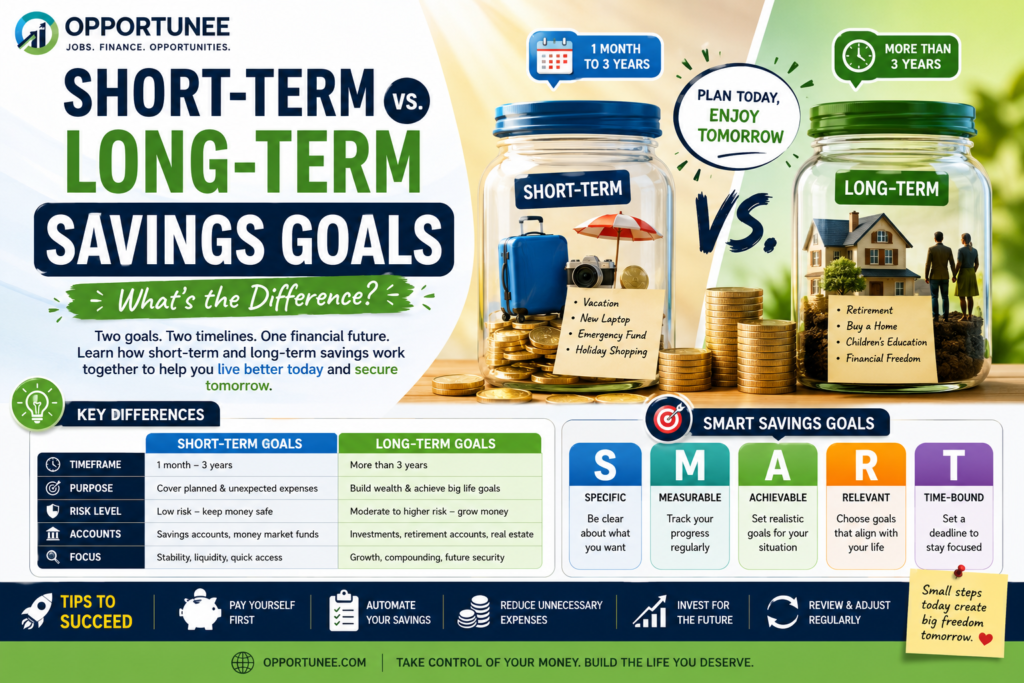
Introduction: Short-term savings are for immediate needs or emergencies (up to 3 years) and require safe, highly liquid accounts. Long-term savings span 5+ years, prioritize compounding wealth, and tolerate market risk. Check out this detailed Investopedia Guide or learn more on Yahoo Finance. [1, 2, 3, 4, 5]
What Are Short-Term Savings Goals?
Short-term savings goals are financial objectives you plan to achieve within one month to three years. These goals usually involve expenses that you know are coming and want to pay for without borrowing money.
Examples include:
- Building an emergency fund
- Saving for a vacation
- Buying a new laptop
- Paying school fees
- Covering holiday expenses
- Purchasing furniture
- Vehicle repairs
- Wedding expenses
- Medical bills
- Home appliances
Since you’ll need this money relatively soon, it should be kept somewhere that is easy to access and has a low risk of losing value.
What Are Long-Term Savings Goals?
Long-term savings goals are financial objectives that typically take more than three years to achieve. These goals often involve larger amounts of money and require consistent contributions over time.
Examples include:
- Buying a home
- Retirement planning
- Starting a business
- Children’s education
- Financial independence
- Buying investment property
- Building investment portfolios
- Early retirement
- Major home renovations
Because these goals have a longer time horizon, your money has more opportunity to grow through investing while also recovering from short-term market fluctuations.
Short-Term vs. Long-Term Savings Goals: At a Glance
| Feature | Short-Term Goals | Long-Term Goals |
|---|---|---|
| Timeframe | 1 month–3 years | More than 3 years |
| Risk Level | Low | Moderate to higher (depending on investments) |
| Accessibility | High | Lower |
| Primary Purpose | Upcoming expenses | Future wealth and major life goals |
| Typical Accounts | Savings accounts, money market funds | Retirement accounts, diversified investment portfolios |
Why You Need Both Types of Savings
Many people focus on one type of savings while neglecting the other. This can create financial problems.
For example:
- Saving only for retirement may leave you unprepared for emergencies.
- Saving only for short-term expenses may delay long-term wealth building.
A balanced savings strategy helps you manage today’s expenses while preparing for tomorrow’s opportunities.
Benefits include:
- Reduced financial stress.
- Greater financial flexibility.
- Less reliance on debt.
- Better preparedness for unexpected events.
- Improved long-term financial security.
How to Prioritize Your Savings Goals
If you’re unsure where to begin, use this order of priority:
1. Build an Emergency Fund
Before saving for vacations or luxury purchases, establish an emergency fund.
Many financial experts recommend saving three to six months of essential living expenses, although even a smaller emergency fund provides valuable protection.
2. Pay Off High-Interest Debt
High-interest debt often costs more than your savings earn.
Reducing expensive debt can improve your overall financial position before increasing long-term investments.
3. Save for Short-Term Goals
Once your emergency fund is underway, begin saving for planned expenses such as:
- Annual insurance
- School expenses
- Holidays
- Vehicle maintenance
Planning ahead reduces financial surprises.
4. Invest for Long-Term Goals
After covering essential short-term needs, consistently contribute toward long-term goals such as retirement or purchasing a home.
The earlier you begin, the more time your investments have to benefit from compound growth.
Choosing the Right Place to Keep Your Savings
Where you save matters almost as much as how much you save.
For short-term goals, many people choose accounts that offer stability and easy access. For longer-term goals, investment accounts may provide greater growth potential, although they can also fluctuate in value.
In general:
- Short-term savings: Prioritize safety and liquidity.
- Long-term savings: Prioritize long-term growth while matching investments to your risk tolerance.
Financial products vary by country, so compare fees, accessibility, and risks before choosing an account.
Common Mistakes People Make
Avoid these common savings mistakes:
- Saving without specific goals.
- Mixing emergency savings with everyday spending.
- Ignoring inflation when planning long-term goals.
- Delaying retirement contributions.
- Keeping all long-term savings in low-interest accounts.
- Investing money you’ll need in the near future.
- Failing to review savings goals regularly.
Small mistakes repeated over time can significantly slow your financial progress.
How to Balance Short-Term and Long-Term Savings Goals
Finding the right balance between short-term and long-term savings is one of the biggest challenges in personal finance. The key is to avoid putting all your money into one goal while ignoring the other.
A simple strategy is to divide your savings into categories based on priority.
Priority 1: Financial Security
These goals protect you from unexpected financial setbacks.
Examples include:
- Emergency fund
- Insurance deductibles
- Essential home repairs
- Vehicle maintenance
Complete these first before focusing on lifestyle goals.
Priority 2: Planned Expenses
These are expenses you know will happen.
Examples include:
- Vacations
- School fees
- Holiday shopping
- New electronics
- Furniture
- Wedding expenses
Saving gradually throughout the year prevents you from relying on loans or credit cards.
Priority 3: Wealth-Building Goals
These goals improve your financial future.
Examples include:
- Retirement
- Home ownership
- Investment portfolio
- Starting a business
- Children’s education
These goals often require years of consistent saving and investing.
Use SMART Savings Goals
Setting vague goals such as “I want to save more money” often leads to disappointment.
Instead, make your goals SMART.
Your goal should be:
- Specific
- Measurable
- Achievable
- Relevant
- Time-bound
Example
Instead of saying:
I want to buy a car.
Say:
I will save $6,000 over the next 24 months by saving $250 each month.
A clear target makes it easier to stay motivated and measure your progress.
Automate Your Savings
One of the easiest ways to stay consistent is to automate your savings.
You can schedule automatic transfers every payday into separate savings or investment accounts.
Benefits include:
- Reduces the temptation to spend.
- Builds consistency.
- Makes saving a habit.
- Helps you reach goals faster.
Many banks and financial institutions offer automatic transfer features at no additional cost.
Review Your Goals Regularly
Life changes, and so should your savings plan.
Review your goals at least every six months or whenever you experience major life events such as:
- A new job
- Marriage
- Having children
- Buying a home
- Starting a business
- A significant increase or decrease in income
Ask yourself:
- Am I on track?
- Have my priorities changed?
- Can I increase my monthly savings?
- Do I need to adjust my timeline?
Regular reviews help keep your financial plan realistic and effective.
Tips to Reach Your Savings Goals Faster
Building savings doesn’t always require a higher income. Often, improving your financial habits can make a significant difference.
Consider these practical strategies:
- Pay yourself first before spending.
- Create a realistic monthly budget.
- Reduce unnecessary subscriptions.
- Avoid impulse purchases.
- Increase your savings whenever your income increases.
- Save unexpected income such as bonuses or tax refunds.
- Track your spending regularly.
- Build multiple income streams where possible.
Consistency is more important than making large deposits occasionally.
Example Savings Plan
Suppose your monthly take-home income is $3,500.
Your savings plan could look like this:
| Goal | Monthly Contribution |
|---|---|
| Emergency Fund | $250 |
| Vacation | $100 |
| Home Deposit | $300 |
| Retirement Investments | $250 |
| Children’s Education | $100 |
Total Monthly Savings: $1,000
Adjust the amounts to match your own income and priorities.
Frequently Asked Questions
Which is more important: short-term or long-term savings?
Both are important because they serve different purposes. Short-term savings help you manage upcoming expenses and emergencies, while long-term savings prepare you for major financial goals and future security.
Should I save before investing?
It’s generally recommended to establish a basic emergency fund before investing. Having accessible savings can prevent you from selling investments or taking on debt when unexpected expenses arise.
How much should I save each month?
The right amount depends on your income, expenses, and financial goals. Many people aim to save at least 20% of their income, but any consistent amount is better than not saving at all.
Can I work toward multiple savings goals at the same time?
Yes. Many people successfully divide their monthly savings among several goals, such as an emergency fund, retirement, and a future home purchase. Prioritize your most important goals while maintaining consistency.
Hence:
- Short-term savings cover goals you expect to achieve within one month to three years.
- Long-term savings focus on goals that typically take more than three years.
- Both types of savings are essential for financial stability.
- Build an emergency fund before focusing on lifestyle goals.
- Automate your savings whenever possible.
- Review your financial goals regularly.
- Adjust your savings strategy as your income and priorities change.
- Consistent saving is more important than saving large amounts occasionally.
Finally:
Saving money is not simply about setting funds aside—it’s about preparing for the future with purpose. Short-term savings provide financial stability by helping you handle expected expenses and unexpected emergencies without relying on debt. Long-term savings, on the other hand, help you achieve life-changing goals such as home ownership, retirement, business ownership, or financial independence.
The most effective financial plans include both. By clearly defining your goals, choosing the right savings strategy, and contributing consistently, you create a solid financial foundation that can adapt to life’s changes. Even modest monthly contributions can grow into meaningful savings over time.
Remember, financial success is rarely achieved through one big decision. It is built through small, consistent actions repeated month after month. Start with one savings goal today, stay committed, and adjust your plan as your financial situation evolves.