
Introduction: To really jumpstart your financial journey, you can implement a 7-day reset plan to break the financial stress and ensure you build strong habits.
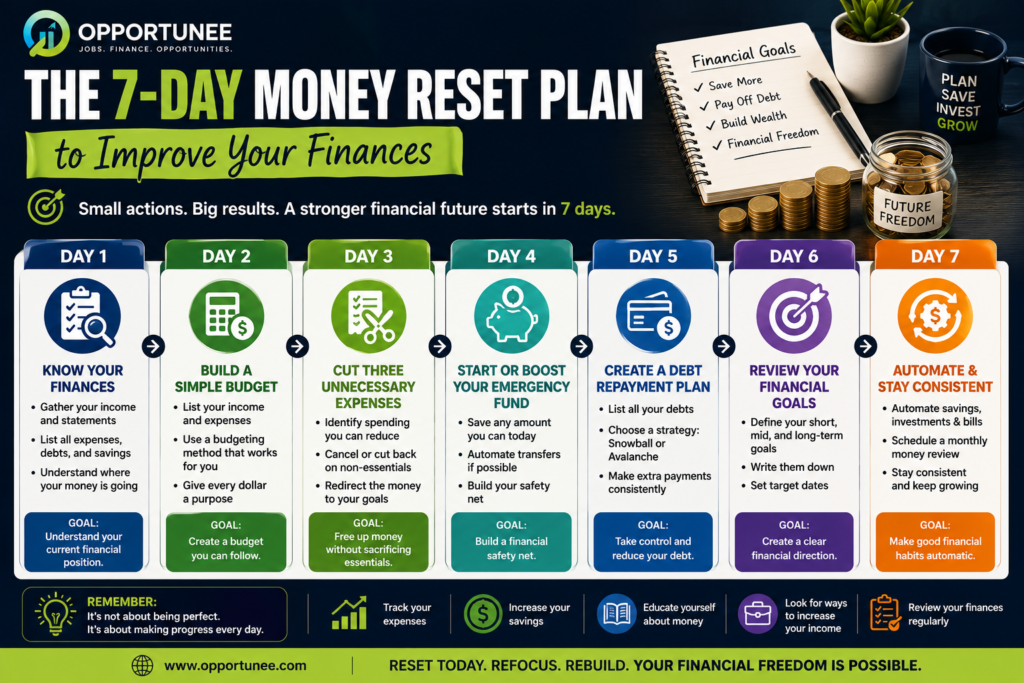
This simple 7-day money plan will reset your money in just 1 week. Learn to budget, save, cut debt and develop better financial habits.
Here we go.
If your finances feel out of control, you’re not alone. Overspending, missed savings goals, and growing debt can leave anyone feeling overwhelmed. The good news is that you don’t need months to begin turning things around.
A focused 7-day money reset won’t solve every financial problem overnight, but it can help you regain control, identify money leaks, and create habits that lead to long-term financial stability.
This step-by-step plan gives you one practical task each day. By the end of the week, you’ll have a clearer picture of your finances and a realistic plan for moving forward.
Day 1: Know Where Your Money Is Going
You can’t improve what you don’t measure.
Gather your:
- Bank statements
- Mobile money statements
- Credit card statements
- Pay slips
List:
- Monthly income
- Fixed expenses
- Variable expenses
- Outstanding debts
- Current savings
Highlight any spending that surprised you.
Goal: Understand your current financial position.
Day 2: Build a Simple Budget
Create a budget that matches your lifestyle.
Include:
- Housing
- Food
- Utilities
- Transportation
- Debt payments
- Savings
- Entertainment
If you don’t know where to start, try the 30/30/30/10 or 50/30/20 budgeting rule.
Goal: Give every dollar a purpose.
Day 3: Cut Three Unnecessary Expenses
Look for expenses you can reduce immediately.
Examples include:
- Unused subscriptions
- Daily takeout coffee
- Frequent food delivery
- Impulse online shopping
- Premium services you rarely use
Even small savings add up over time.
Goal: Free up money without sacrificing essentials.
Day 4: Start or Boost Your Emergency Fund
Unexpected expenses happen.
If you don’t have an emergency fund, start today.
Don’t worry about saving thousands immediately.
Even $10, $20, or $50 is progress.
Set up automatic transfers if possible.
Goal: Build a financial safety net.
Day 5: Create a Debt Repayment Plan
Write down every debt you owe.
Include:
- Balance
- Interest rate
- Minimum payment
Choose a repayment strategy.
Debt Snowball
Pay off the smallest balance first to build momentum.
Debt Avalanche
Pay off the highest-interest debt first to save more money over time.
Goal: Stop debt from controlling your finances.
Day 6: Review Your Financial Goals
Ask yourself:
- What do I want my money to accomplish?
- Where do I want to be in five years?
- What financial habits need to change?
Examples of goals include:
- Build a six-month emergency fund
- Become debt-free
- Save for a home
- Invest regularly
- Start a business
Write your goals down and set target dates.
Goal: Create a clear financial direction.
Day 7: Automate Your Financial Success
Automation removes the temptation to spend money meant for your future.
Consider automating:
- Savings
- Investments
- Bill payments
- Debt repayments
Also schedule a monthly “Money Review Day” to:
- Check your budget
- Review spending
- Track savings
- Monitor investments
- Adjust your financial goals
Goal: Make good financial habits automatic.
Bonus Habits to Keep the Momentum Going
Once you’ve completed your seven-day reset, continue strengthening your finances by:
- Tracking expenses weekly.
- Avoiding impulse purchases.
- Increasing your savings whenever your income grows.
- Reading one personal finance book every few months.
- Reviewing your net worth every quarter.
- Looking for opportunities to increase your income through side hustles or career growth.
Small, consistent improvements often produce the biggest long-term results.
Common Mistakes to Avoid During Your Money Reset
Avoid these pitfalls:
- Trying to change everything at once.
- Creating an unrealistic budget.
- Ignoring irregular expenses.
- Depending on credit cards to fill budget gaps.
- Quitting after one setback.
Progress matters more than perfection.
Frequently Asked Questions
Can I improve my finances in seven days?
You won’t become financially independent in one week, but you can establish better habits, organize your finances, and create a realistic plan for long-term improvement.
What if I have a very low income?
A money reset still helps. Budgeting, tracking expenses, avoiding unnecessary debt, and saving even small amounts can improve financial stability over time.
Should I save money or pay off debt first?
If you have high-interest debt, it’s generally wise to build a small emergency fund first and then focus on paying down that debt while continuing to save consistently.
In Conclusion:
Financial improvement doesn’t require dramatic changes—it requires consistent action. This seven-day money reset is designed to help you take control of your finances one step at a time.
Don’t aim for a perfect financial life after one week. Instead, use these seven days as the beginning of healthier money habits that you can maintain for years to come. The choices you make today can have a lasting impact on your financial future.