
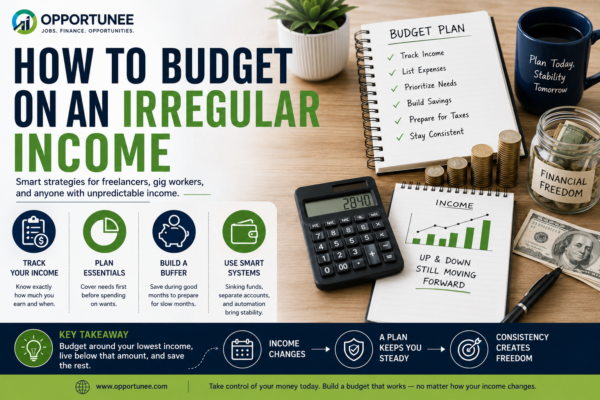
follow this steps to fully budget your income.

How to Budget on an Irregular Income: A Complete Guide to Getting Your Money Under Control

Introduction: Budgeting on an irregular income requires building a “survival budget” based on your lowest-earning months. You then use high-earning months to fund savings, buffer accounts, and seasonal costs. For comprehensive guides on adapting these frameworks, check NerdWallet’s Budgeting Guide and Investopedia’s Budgeting Strategies. [1, 2, 3, 4] How to Budget on an Irregular Income…

Read More
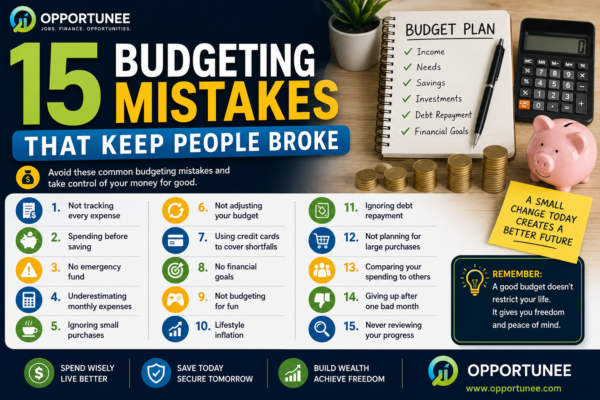
avoid these mistakes at all cost.

15 Budgeting Mistakes That Keep People Broke

Introduction: Common budgeting mistakes that keep people broke include unrealistic planning, ignoring variable expenses, and failing to save for emergencies. To break the cycle, people should review and adapt their strategies using educational resources like the Ramsey Solutions Budgeting Guide or the NerdWallet Budgeting Calculator. [1, 2, 3, 4, 5] A strict budget doesn’t just…

Read More

The 30/30/30/10 Budget Rule Explained: Is It Better Than the 50/30/20 Rule?

Introduction: The 30/30/30/10 rule splits your after-tax income into four categories: 30% for housing, 30% for other necessities, 30% for financial goals (savings/debt), and 10% for wants. It is often preferred by aggressive savers or those with high housing costs over the traditional 50/30/20 rule (50% needs, 30% wants, 20% savings). What Is the 30/30/30/10…

Read More
this will change how you understand life.

25 Money Habits That Set The Rich Apart From The Rest (2026 Guide)

Introduction: Wealthy individuals often build and maintain wealth by prioritizing asset accumulation over liabilities, automating savings, and somehow trying to avoid lifestyle inflation. These habits include developing multiple income streams, tracking net worth, and maintaining a long-term perspective on investments to leverage compound interest. Here are 25 money habits that consistently separate rich people from…

Read More

How to Build an Emergency Fund From Scratch: 11 Proven Ways (Even on a Low Income)

You don’t need a six-figure salary to save for a rainy day. Here’s how to start—with whatever you have. Introduction: Building an emergency fund on a low income is a matter of incremental consistency. Start by setting a small, achievable goal of saving $500 to $1,000, calculate your bare-bones monthly essentials, and redirect any loose…

Read More
Opportunee
Privacy Overview

This website uses cookies so that we can provide you with the best user experience possible. Cookie information is stored in your browser and performs functions such as recognising you when you return to our website and helping our team to understand which sections of the website you find most interesting and useful.